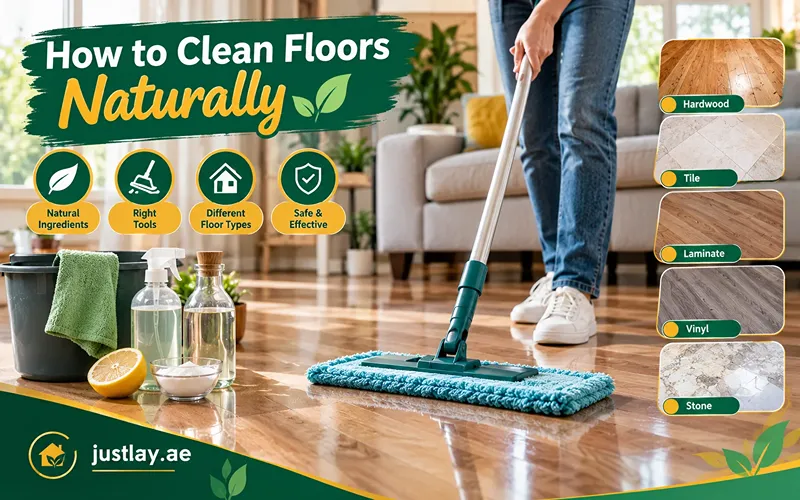
Learning how to clean floors naturally is mostly about doing less: less product, less water, and fewer harsh chemicals. For most sealed floors, warm water, a few drops of mild dish soap, and a good microfiber mop will do the job better than a cabinet full of sprays.
The catch is that “natural” doesn’t automatically mean “safe for every surface.” Vinegar can etch marble. Baking soda can scratch a glossy finish. Too much water can swell laminate flooring in a single afternoon. This guide walks you through what actually works on each floor type, so you get a clean floor without damaging the finish or voiding your warranty.
Why Choose Natural Floor Cleaning?
Switching to natural cleaning of flooring in Dubai has practical benefits beyond the label:
- Better indoor air. Many commercial cleaners release fragrances and volatile compounds. Plain water and mild soap release almost nothing.
- Safer for kids and pets. Little ones and animals spend a lot of time on the floor. Fewer residues mean less to touch, lick, or track around.
- Less buildup. Heavy cleaners and “shine” products often leave a film that attracts dirt and makes floors look dull. Simple solutions rinse away cleanly.
- Lower cost. A bottle of dish soap lasts months when you only need half a teaspoon per bucket.
- Kinder to finishes. Gentle, pH-neutral cleaning is what most flooring manufacturers recommend anyway.
Natural Floor-Cleaning Ingredients: What’s Safe and What Isn’t
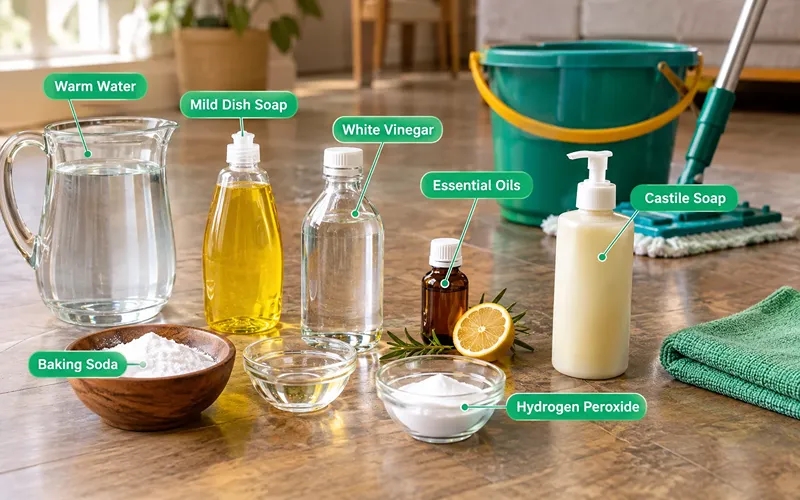
A small set of household ingredients covers almost every natural floor-cleaning job. What matters is matching each one to the right surface.
Warm Water
Warm water is the safest and most underrated wooden flooring cleaner. On a floor that is swept or vacuumed regularly, a damp microfiber mop and plain warm water removes most everyday grime with zero residue. Start here before adding anything else.
Mild Dish Soap
A few drops of a gentle, dye-free, fragrance-free dish soap cut through grease and sticky spots. Use very little: about ½ teaspoon per gallon (roughly 4 litres) of warm water. More soap does not clean better. It leaves a dull, tacky film that attracts dirt.
For natural stone, choose a soap labelled pH-neutral and keep the amount to a minimum.
White Vinegar (Use With Caution)
Vinegar is acidic. Diluted, it is useful on glazed ceramic and porcelain tile and on some vinyl floors. But it is not a universal cleaner:
- Natural stone: Never. Acid etches marble, limestone, travertine, and onyx, leaving dull spots that need professional polishing. It can also break down sealers on granite and slate.
- Hardwood: Avoid. Many hardwood manufacturers advise against vinegar because repeated use can dull polyurethane finishes over time.
- Laminate and vinyl: Only if your manufacturer allows it. Some do; many don’t.
- Grout: Occasional use is fine, but frequent acid cleaning can wear cement-based grout and grout sealer.
Baking Soda (Use With Caution)
Baking soda is a mild abrasive and mildly alkaline. It works well as a paste for scrubbing grout or unsealed garage concrete. On glossy finishes, though, it can leave fine scratches and a hazy residue. Keep it off hardwood, laminate, high-gloss vinyl, and polished stone.
Other Useful Household Ingredients
- 3% hydrogen peroxide: Lifts organic stains from ceramic and porcelain grout. Spot-test coloured grout first, and do not use it on natural stone without testing, as it can lighten some stones.
- Castile soap: Plant-based, but alkaline. It can leave a film on vinyl and some finishes, so use it sparingly and only where your manufacturer permits soap-based cleaners.
- Essential oils: Optional for scent only. Use one or two drops per bucket at most. Oils can make floors slippery and leave residue, and several oils (such as tea tree, eucalyptus, and citrus) are toxic to cats and dogs.
Safety note: Never mix vinegar with hydrogen peroxide in the same container, and never combine any homemade cleaner with bleach. Mixing vinegar and baking soda doesn’t create a stronger cleaner either. They neutralise each other into mostly salty water.
Tools You Need for Natural Floor Cleaning

Good tools do half the work. With the right mop, you need less water and less soap.
- Soft-bristle broom or dust mop for daily grit removal. Grit acts like sandpaper underfoot.
- Vacuum with a hard-floor setting. Turn off the beater bar or use a soft roller head so it doesn’t scratch.
- Flat microfiber mop with washable pads. It holds just enough moisture and traps fine dust instead of pushing it around.
- Spray bottle for misting cleaner onto moisture-sensitive floors instead of soaking them.
- Two buckets (one for cleaning solution, one for rinsing the mop) for tile and concrete.
- Soft nylon brush or old toothbrush for grout lines and corners.
- Soft cotton or microfiber towels for drying and spot work.
- Plastic scraper for gum, wax, or dried-on food.
How to Clean Different Floor Types Naturally
Before you clean, check your flooring manufacturer’s care guide. It overrides any general advice, including this article, and following it protects your warranty.
How to Clean Hardwood Floors

First, find out how your hardwood is finished. Put a drop of water on an inconspicuous spot. If it beads up, the floor has a surface finish such as polyurethane. If it soaks in and darkens the wood, the floor is likely oiled, waxed, or worn through.
Suitable natural ingredients: Warm water; ½ teaspoon mild dish soap per gallon of water for greasy areas.
Tools: Soft broom or dust mop, vacuum with beater bar off, flat microfiber mop, dry towel.
Step-by-step (surface-finished hardwood):
- Sweep, dust-mop, or vacuum to remove all grit.
- Dip the microfiber pad in warm water (or the mild soap solution) and wring it until it is barely damp.
- Mop in the direction of the wood grain, working in small sections.
- If you used soap, go over the area again with a pad dampened in plain water.
- Dry any visible moisture right away with a soft towel.
For oiled or waxed hardwood: Stick to dry cleaning and spot-cleaning with a lightly damp cloth. Follow the manufacturer’s maintenance schedule for re-oiling or re-waxing.
Precautions:
- Never wet-mop or let water sit. Wood swells, cups, and stains.
- Skip vinegar, baking soda, steam mops, and abrasive pads.
- Avoid oil soaps, olive oil, and “shine” polishes on surface-finished floors. They build up and can interfere with future recoating.
How to Clean Laminate Floors

Laminate has a tough wear layer on top, but its core is pressed wood fibre. Water that seeps into the seams makes the edges swell and peak, and that damage is usually permanent.
Suitable natural ingredients: Warm water; a drop or two of mild dish soap in a spray bottle for sticky spots.
Tools: Dust mop or vacuum (hard-floor setting), flat microfiber mop, spray bottle, dry microfiber cloth.
Step-by-step:
- Dust-mop or vacuum thoroughly.
- Fill a spray bottle with 2 cups (about 500 ml) of warm water and 2–3 drops of dish soap, or plain water.
- Lightly mist a small area, about 1 metre square at a time. Never pour or puddle liquid.
- Wipe with a dry or barely damp microfiber mop, following the length of the planks.
- Buff any streaks with a dry microfiber cloth.
Precautions:
- No steam mops, soaking-wet mops, or buckets of water.
- Skip wax, oil soaps, and polishes. Laminate isn’t meant to absorb them, so they sit on top as a slippery, cloudy film.
- Avoid baking soda and scouring pads, which can dull the wear layer.
- Use vinegar only if your laminate manufacturer specifically approves it.
How to Clean Vinyl Floors

This covers sheet vinyl, vinyl tile (LVT), and luxury vinyl plank (LVP). Vinyl is water-resistant on its surface, but water can still get under seams and edges, and the top wear layer scratches more easily than people expect.
Suitable natural ingredients: Warm water; ½ teaspoon mild dish soap per gallon of water. Some vinyl manufacturers accept a weak vinegar solution (about ½ cup white vinegar per gallon of water), but others prohibit acids, so check your care guide first.
Tools: Soft broom or vacuum (hard-floor setting), flat microfiber mop, bucket, dry microfiber cloth.
Step-by-step:
- Sweep or vacuum to remove grit that could scratch the wear layer.
- Mix warm water with a small amount of dish soap.
- Mop with a well-wrung microfiber pad. Damp, not dripping.
- Rinse the pad in clean water and go over the floor again to remove any soap residue.
- Dry wet areas, especially near seams and edges.
Precautions:
- Avoid steam mops on LVP and LVT unless the manufacturer explicitly allows them. Heat can weaken adhesives and warp planks.
- Don’t use wax, “mop and shine” products, or oil soaps. Most modern vinyl is no-wax and these leave a sticky buildup.
- Skip baking soda and abrasive pads.
- Rubber- or latex-backed rugs can permanently stain vinyl. Use mats labelled safe for vinyl floors.
How to Clean Ceramic and Porcelain Tile Floors Naturally

Glazed ceramic and porcelain are the most forgiving floors for natural cleaning. The tile itself rarely gives trouble. The grout between the tiles is where dirt and stains collect.
Suitable natural ingredients: Warm water and mild dish soap for routine mopping. For a periodic refresh of glazed tile, ½ cup white vinegar per gallon of warm water. For grout, a baking soda paste or 3% hydrogen peroxide.
Tools: Broom or vacuum, microfiber or string mop, two buckets, soft nylon grout brush, dry towel.
Step-by-step:
- Sweep or vacuum, paying attention to grout lines and corners.
- Mop with warm water and a small amount of dish soap. Rinse the mop often in a second bucket of clean water.
- For dirty grout, apply a paste of 3 parts baking soda to 1 part water. Let it sit for 5–10 minutes, then scrub gently with a soft brush.
- For dark organic stains in light grout, apply 3% hydrogen peroxide, wait about 10 minutes, then scrub and rinse.
- Rinse the whole floor with clean water and dry it to prevent water spots and soap haze.
Precautions:
- Unglazed tile, terracotta, and saltillo are porous. Treat them more like natural stone: no vinegar, and follow the sealer manufacturer’s guidance.
- Use vinegar on grout only occasionally. Frequent acid cleaning can erode cement-based grout and strip grout sealer.
- Avoid steel wool and stiff wire brushes, which scratch glaze and gouge grout.
- Spot-test peroxide on coloured grout before treating a large area.
- Matte and textured porcelain hold residue in their surface, so rinse well.
How to Clean Natural Stone Floors

Natural stone needs the gentlest approach of all. Marble, limestone, travertine, and onyx are calcium-based, so even mild acids such as vinegar or lemon juice react with the surface and leave dull, etched marks. Granite and slate resist acid better, but their sealers do not.
Suitable natural ingredients: Warm water. For greasy areas, a few drops of a pH-neutral, dye-free dish soap per gallon of water.
Tools: Soft dust mop (untreated), vacuum with beater bar off, flat microfiber mop, two buckets, soft cotton towels.
Step-by-step:
- Dust-mop daily if possible. Sand and grit are the main cause of wear on stone.
- Mop with warm water, or water with a very small amount of pH-neutral soap.
- Follow with a second pass using clean water only, so no soap film is left behind.
- Dry the floor with soft towels to prevent water marks, especially on polished marble.
- Blot spills immediately. Don’t wipe, which spreads them. Acidic spills like wine, juice, coffee, and tomato sauce are the most damaging.
Check your sealer: Drip a little water on the stone. If it darkens within a few minutes, the stone is absorbing liquid and needs resealing.
Precautions:
- Never use vinegar, lemon, or other acidic cleaners.
- Don’t scrub polished stone with baking soda or any abrasive powder.
- Avoid ammonia and bleach, which can dull the surface and degrade sealers.
- For deep stains or etching, use a stone-specific poultice or call a stone-care professional rather than experimenting.
How to Clean Concrete Floors

How you clean concrete depends on its finish. Sealed and polished concrete (common in modern homes and basements) behaves like a finished floor. Unsealed concrete (typical in garages and patios) is porous and absorbs spills.
Suitable natural ingredients: Warm water and mild dish soap for all concrete. For oil stains on unsealed concrete, an absorbent material (cat litter, sawdust, or cornstarch) followed by a baking soda paste.
Tools: Push broom or vacuum, microfiber or string mop, bucket, stiff nylon brush (unsealed concrete only), squeegee for large areas.
Step-by-step (sealed or polished concrete):
- Dust-mop or vacuum to remove grit that can scratch the sealer.
- Mop with warm water and ½ teaspoon dish soap per gallon.
- Rinse with clean water and let the floor air-dry or squeegee off excess.
Step-by-step (unsealed garage or patio concrete):
- Sweep away loose debris.
- For fresh oil, cover the stain with cat litter or sawdust, press it in, and leave it for several hours before sweeping it up.
- Scrub the remaining stain with a paste of baking soda and a little water, or a stronger dish soap solution, using a stiff nylon brush.
- Rinse with a hose or clean water and let it dry fully.
Precautions:
- Avoid vinegar on sealed and polished concrete. Acid can dull the sealer and the polished surface.
- Don’t rely on repeated vinegar cleaning for unsealed concrete either, as acid slowly etches the surface.
- Skip wire brushes on sealed or coloured concrete.
- A pressure washer is fine for outdoor unsealed concrete, but keep the nozzle moving to avoid etching marks.
Natural Floor Cleaning Methods Compared
Use this quick-reference table to match each floor type with the right natural cleaning method. When your manufacturer’s instructions differ, follow theirs.
| Floor type | Best everyday natural cleaner | Moisture level | Vinegar | Baking soda | Steam mop | Key precaution |
| Hardwood (sealed) | Warm water; trace of mild dish soap | Barely damp | No | No | No | Dry immediately; mop with the grain |
| Hardwood (oiled/waxed) | Dry dust mop; damp cloth for spots | Dry | No | No | No | Follow maker’s oil/wax schedule |
| Laminate | Misted warm water; drop of dish soap | Barely damp (spray only) | Only if maker allows | No | No | Keep water out of seams |
| Vinyl (sheet, LVT, LVP) | Warm water + mild dish soap | Damp | Only if maker allows | No | Usually no (check maker) | No wax; avoid rubber-backed mats |
| Glazed ceramic/porcelain | Warm water + mild dish soap | Damp to wet | Yes, diluted, occasionally | Yes, for grout | Yes, on sealed grout | Rinse well; go easy on grout |
| Natural stone | Warm water; pH-neutral soap sparingly | Damp | Never | No (polished stone) | Check with stone maker | Blot acidic spills; reseal as needed |
| Concrete (sealed/polished) | Warm water + mild dish soap | Damp | No | No | Check sealer maker | Protect the sealer from grit |
| Concrete (unsealed) | Dish soap solution; absorbent + baking soda for oil | Wet is fine | Avoid repeated use | Yes | Not needed | Let it dry fully |
How to Make a Natural Floor Cleaner at Home

A homemade floor cleaner takes about a minute to mix. Make small batches fresh, label every bottle, and always spot-test in a hidden area first.
1. Gentle All-Purpose Floor Cleaner
Best for: Sealed hardwood, vinyl, sealed concrete, ceramic and porcelain tile.
- 1 gallon (about 4 litres) warm water
- ½ teaspoon mild, dye-free dish soap
Stir gently so it doesn’t foam. Dip a microfiber pad, wring it out well, and mop. On hardwood, wring until barely damp. Discard leftovers after cleaning.
2. Laminate and Spot-Cleaning Spray
Best for: Laminate, vinyl, and quick spot cleans on sealed hardwood.
- 2 cups (about 500 ml) warm water
- 2–3 drops mild dish soap
Pour into a clean spray bottle and shake lightly. Mist the floor or a microfiber pad, never soak it, then buff dry. Make a fresh bottle every few days.
3. Glazed Tile Refresher
Best for: Glazed ceramic and porcelain tile only. Not for stone, hardwood, laminate, or sealed concrete.
- 1 gallon (about 4 litres) warm water
- ½ cup white vinegar
Mop as usual, then rinse with clean water. Use it occasionally to cut mineral haze, not as your daily cleaner, to protect the grout.
4. Grout-Scrubbing Paste
Best for: Ceramic and porcelain grout, and unsealed concrete stains.
- 3 tablespoons baking soda
- 1 tablespoon water
Mix into a spreadable paste. Apply to the grout line, wait 5–10 minutes, scrub with a soft nylon brush, then rinse thoroughly so no white residue remains.
5. Stone-Safe Cleaner
Best for: Marble, granite, limestone, travertine, slate.
- 1 gallon (about 4 litres) warm water
- 3–4 drops pH-neutral dish soap
Mop, follow with a plain-water pass, and towel dry. Nothing acidic, nothing abrasive.
Tips for Removing Dirt, Grease, and Everyday Stains Naturally

Most floor stains come off with patience and the mildest method first. Escalate only if needed, and always test in a hidden corner.
Everyday Dirt and Dust
- Dry-clean before you wet-clean. Mopping over grit just turns it into muddy streaks and scratches.
- Put a washable mat inside and outside each entrance. Most household dirt arrives on shoes.
- Swap your microfiber pad when it looks dirty. A soiled pad redeposits grime.
Kitchen Grease
- Wipe the spot with a cloth dipped in warm water and a drop of dish soap.
- Let the solution sit for a minute on tile or concrete to loosen the grease, then wipe and rinse.
- On hardwood, laminate, and stone, work quickly and dry the area straight away.
Sticky Spills and Dried Food
- Lay a warm, damp cloth over the spot for a minute to soften it.
- Lift it with a plastic scraper or an old card, never a metal blade.
- Wipe with the mild soap solution and dry.
Gum, Candle Wax, and Crayon
- Hold a bag of ice on the spot until it hardens.
- Gently pop it off with a plastic scraper.
- Clean away any remaining trace with a damp cloth.
Scuff Marks
- Rub with a dry microfiber cloth or a clean tennis ball. Many rubber-sole scuffs lift with friction alone.
- On tile, a little baking soda paste on a damp cloth helps. Skip this on glossy finishes.
Pet Accidents
- Blot up as much liquid as you can with paper towels. Don’t rub.
- Clean with the mild soap solution, then wipe with plain water and dry.
- An enzyme cleaner breaks down odour-causing proteins. Check the label says it’s safe for your floor type.
- On hardwood, speed matters: urine left to sit can stain wood permanently.
Grout Stains
- Scrub with baking soda paste and a soft brush.
- For stubborn organic stains, apply 3% hydrogen peroxide, wait 10 minutes, scrub, and rinse.
- Seal grout once it’s clean and dry to help prevent future staining.
Common Natural Floor-Cleaning Mistakes to Avoid

Most floor damage from “natural” cleaning comes from a few repeat mistakes:
- Using vinegar everywhere. It’s great on glazed tile, but it etches natural stone and can dull hardwood and some vinyl finishes.
- Scrubbing with baking soda on glossy surfaces. Its fine grit leaves micro-scratches and haze on hardwood, laminate, high-gloss vinyl, and polished stone.
- Using too much water. Puddles seep into seams and cause swelling, cupping, and lifting on wood and laminate.
- Using too much soap. Excess soap leaves a sticky film that attracts dirt and makes floors look dull and streaky.
- Mopping before sweeping. Grit plus water equals scratches and muddy streaks.
- Mopping with dirty water. Change the water as soon as it looks cloudy, or use the two-bucket method.
- Adding oils to “nourish” the floor. Olive oil and heavy doses of essential oils make floors slippery and leave buildup.
- Using a steam mop on the wrong floor. Heat and moisture can damage hardwood, laminate, and many vinyl planks.
- Assuming “natural” means safe for pets. Several essential oils are toxic to cats and dogs, even in small amounts.
- Ignoring the manufacturer’s care guide. Using an unapproved method can damage the floor and void the warranty.
Conclusion: Best Practices for Cleaning Floors Naturally
The secret to cleaning floors naturally is matching gentle ingredients to the right surface:
- Hardwood: Barely damp microfiber, warm water, a trace of soap, and immediate drying.
- Laminate: A light mist, never a wet mop, and no wax or steam.
- Vinyl: Warm water and mild soap, no wax, and vinegar only with the manufacturer’s approval.
- Ceramic and porcelain: Soap and water for routine cleaning, diluted vinegar occasionally, and baking soda or peroxide for grout.
- Natural stone: Water and pH-neutral soap only. No acids, no abrasives.
- Concrete: Mild soap for sealed floors; absorbents and baking soda for oil on unsealed concrete.
Whatever your floor, sweep before you mop, use less water and soap than you think you need, and follow your manufacturer’s care guide. Done consistently, natural floor cleaning keeps your floors clean, safe, and looking good for years.
Frequently Asked Questions
What is the best natural floor cleaner?
For most sealed floors, the best natural floor cleaner is warm water with about ½ teaspoon of mild dish soap per gallon. It’s gentle, inexpensive, and safe for hardwood, vinyl, tile, and sealed concrete when used with a well-wrung microfiber mop.
Is vinegar safe for all floors?
No. Diluted vinegar is fine for glazed ceramic and porcelain tile. It should never be used on marble, limestone, travertine, or other natural stone, and it’s best avoided on hardwood and sealed concrete. For laminate and vinyl, check the manufacturer’s care guide.
Can I use baking soda to clean floors?
Only in specific spots. A baking soda paste works well on tile grout and unsealed concrete. Avoid it on hardwood, laminate, glossy vinyl, and polished stone, where it can scratch or leave a hazy residue.
How do I clean hardwood floors naturally without damaging them?
Sweep or vacuum first, then use a barely damp microfiber mop with warm water or a very mild dish soap solution. Mop with the grain and dry any moisture straight away. Avoid vinegar, steam, and wet mopping.
Do natural floor cleaners disinfect?
Soap and water remove most dirt and germs physically, which is enough for routine cleaning in most homes. Household vinegar isn’t a registered disinfectant. If you need to disinfect, for example after illness, use a product approved for your floor type and follow its label.
Are natural floor cleaners safe for pets and children?
Water and mild dish soap are among the safest options, as long as you rinse away residue. Be careful with essential oils, since tea tree, eucalyptus, citrus, and several others are toxic to pets. Store all homemade cleaners in labelled bottles out of reach.
Why does my floor look streaky after natural cleaning?
Streaks usually come from too much soap, dirty mop water, or a dirty mop pad. Use less soap, change the water more often, and finish with a clean-water pass and a dry microfiber buff.
How often should I mop my floors?
Sweep or vacuum high-traffic areas daily or every few days. Damp-mop kitchens and entryways weekly, and lower-traffic rooms every two to four weeks. Spot-clean spills as they happen.