A squeaky floor rarely means your house is falling apart, but it can still drive you crazy. It’s the board that gives you away when you sneak into the kitchen at night, or the hallway spot that creaks every time someone walks past. The good news is that most squeaks are easy and cheap to fix once you know what’s causing them.
This guide explains how to fix squeaky floors step by step. You’ll learn why floors squeak, how to find the exact spot, which DIY methods work for different floor types, and when it’s time to call a professional.
What Causes Squeaky Floors?
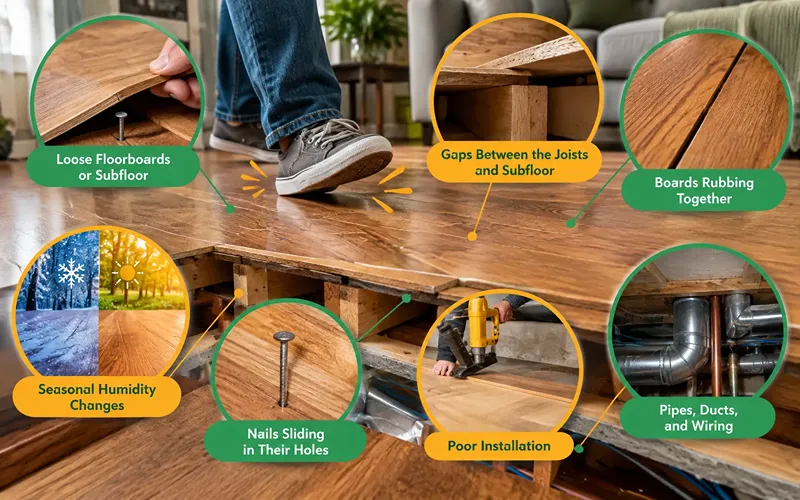
A squeak is almost always caused by movement. When you step on the flooring in Dubai, two surfaces rub against each other or a nail slides in its hole. That friction makes the noise. Here are the most common reasons it happens.
Loose Floorboards or Subfloor
Over time, the nails or screws that hold the floor down can loosen. When a board isn’t held firmly against the joist below, it moves up and down under your weight and creaks.
Gaps Between the Joists and Subfloor
Joists are the horizontal beams that support your floor. If a joist shrinks, twists, or sags slightly, a small gap can form between it and the subfloor above. Each step pushes the subfloor down into that gap, which creates a squeak.
Boards Rubbing Together
Wooden floorboards sit tightly side by side. When they rub against each other along their edges or tongue-and-groove joints, you’ll hear a creak, even if the boards are nailed down well.
Seasonal Humidity Changes
Wood expands when the air is humid and shrinks when it’s dry. In winter, boards can shrink and leave small gaps that let them move. In summer, swelling boards can press against each other. This is why many wooden floors squeak more at certain times of the year.
Nails Sliding in Their Holes
Nails can work loose as the wood moves. A nail that has missed the joist, or one that has pulled partway out, can squeak as it slides up and down.
Poor Installation
Floors installed without enough fasteners, without adhesive, over an uneven subfloor, or without letting the wood adjust to the room first are much more likely to squeak later.
Pipes, Ducts, and Wiring
Sometimes the noise isn’t the floor at all. Heating ducts, water pipes, or cable brackets touching the underside of the subfloor can rub and squeak when the floor flexes.
How to Find the Source of the Squeak
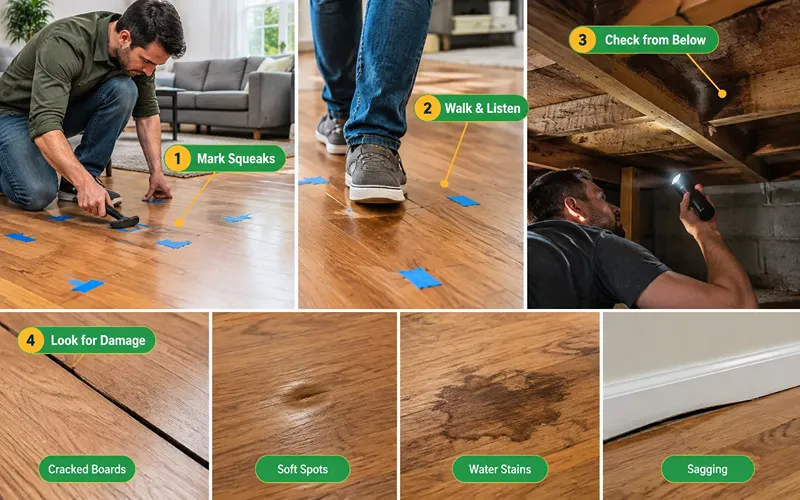
Before you fix anything, find the exact spot. This saves time and stops you from adding screws where they aren’t needed.
Walk slowly over the area and mark each squeak with painter’s tape. It helps to have someone else walk while you listen closely, especially if you can get underneath the vinyl flooring. Press down on small areas with your foot or the handle of a hammer to narrow it down.
If you have access from below, such as through a basement or crawlspace, look up at the subfloor while someone walks above. Watch for boards that move, gaps between the joist and subfloor, or nails that shift. Squeaks often happen right where the floor meets a joist.
Also check the area for warning signs such as cracked boards, soft spots, water stains, or sagging. These point to a bigger problem that a simple squeak fix won’t solve.
Tools and Materials You May Need
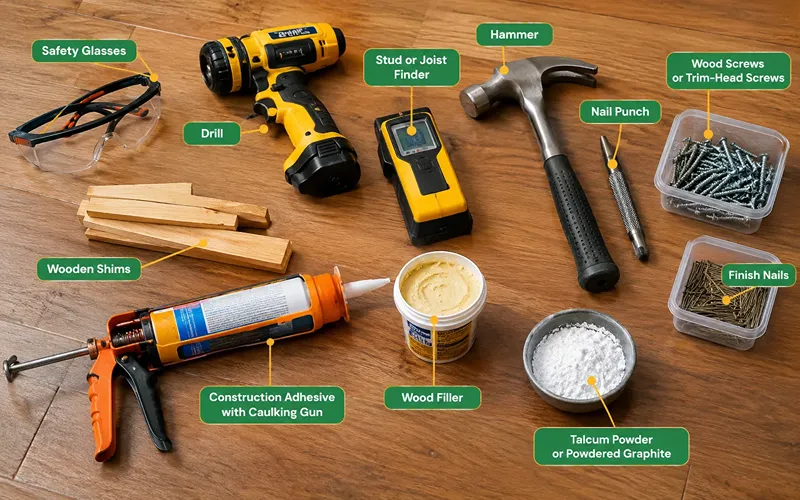
Most squeaky floor repairs need only basic tools. Depending on the method, you may want a drill, a stud or joist finder, a hammer and nail punch, wood screws or trim-head screws, finish nails, wooden shims, construction adhesive with a caulking gun, wood filler, and talcum powder or powdered graphite. Always wear safety glasses when drilling or hammering, and follow the instructions that come with your power tools.
How to Fix Squeaky Floors From Below
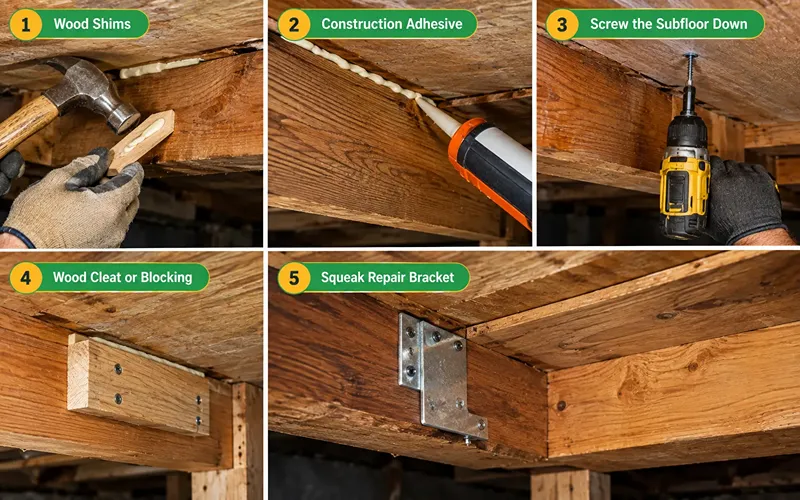
If you can reach the underside of the floor, this is usually the best place to start. You can fix the problem without leaving marks on your finished floor.
Insert Wood Shims
Shims work well when there is a small gap between a joist and the subfloor. Put a little wood glue on a thin wooden shim, then gently tap it into the gap until it fits snugly. Don’t force it too hard. Driving a shim in too far can push the floor up and create a bump or a new squeak.
Fill Gaps With Construction Adhesive
If the gap runs along a longer section of the joist, shims won’t be enough. Instead, run a bead of construction adhesive along the seam where the joist meets the subfloor. The adhesive fills the space and hardens, which stops the subfloor from moving.
Screw the Subfloor Down Tight
If the subfloor has separated from the finished floor above it, you can pull the two back together with short wood screws driven up from below. Have someone stand on the squeaky spot to press the layers together. Drill a pilot hole, then drive the screw up through the subfloor.
Measure carefully first. The screw must be shorter than the combined thickness of the subfloor and the finished flooring, or it will poke through the surface of your floor.
Add a Wood Cleat or Blocking
For a joist that has twisted or pulled away over a longer stretch, attach a piece of lumber (called a cleat) along the side of the joist. Apply construction adhesive to its top edge, press it firmly up against the subfloor, and screw it into the side of the joist.
If the floor feels bouncy between joists, solid wood blocks fitted between neighboring joists can add support and reduce movement.
Use a Squeak Repair Bracket
Hardware stores sell metal brackets made for this job. They screw into the side of the joist and the underside of the subfloor, pulling them tightly together. These are a good option when a gap keeps coming back after shimming.
How to Fix Squeaky Floors From Above
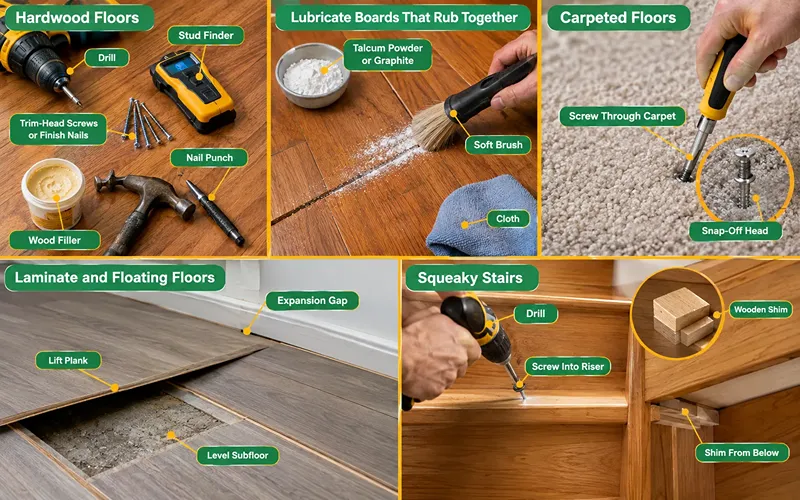
If you live in an upstairs room, or your basement ceiling is finished, you’ll need to work from the top. The right method depends on your floor type.
Hardwood Floors: Screws or Finish Nails
First, find the joist using a stud finder or by following the line of existing nails. Drill a small pilot hole through the floorboard and into the joist to avoid splitting the wood. Then drive in a trim-head screw, which has a small head that’s easier to hide, or a finish nail at a slight angle.
Sink the head just below the surface, then fill the hole with color-matched wood filler. Wipe away extra filler before it dries. Try to place fasteners in less visible spots where possible.
If a board is only slightly raised, you may be able to set a nail punch on top of the existing nail and tap it back down.
Lubricate Boards That Rub Together
When the squeak comes from boards rubbing along their edges, a dry lubricant can quiet them. Sprinkle talcum powder or powdered graphite over the joint, then work it into the gap with a soft brush or by placing a cloth over the area and walking on it. Clean away all leftover powder afterward, because it can make the floor slippery.
Avoid oily sprays such as WD-40 on wood floors. They can stain the wood and attract dirt.
Carpeted Floors: Screw Through the Carpet
You don’t need to pull up carpet to fix a squeak underneath. Special repair kits use screws that are designed to snap off below the surface. You drive the screw through the carpet and pad into the joist, then break off the top. The carpet fibers hide the hole, and the subfloor is held firmly in place.
Laminate and Floating Floors
Floating floors aren’t fixed to the subfloor, so you should not nail or screw through them. They need room to expand and contract.
Squeaks in these floors usually come from an uneven subfloor, a missing expansion gap at the walls, or planks rubbing at the joints. Check that the edges aren’t pressed tightly against the wall or trim. If the subfloor is uneven, the planks may need to be lifted and the low spots leveled, which is often a job for a flooring installer.
Squeaky Stairs
Stairs squeak when a tread (the part you ste p on) rubs against the riser or the stringer beside it. From below, glue small shims or wooden blocks into the gaps. From above, drill pilot holes and drive screws down through the tread into the riser, then fill the holes.
When to Call a Professional
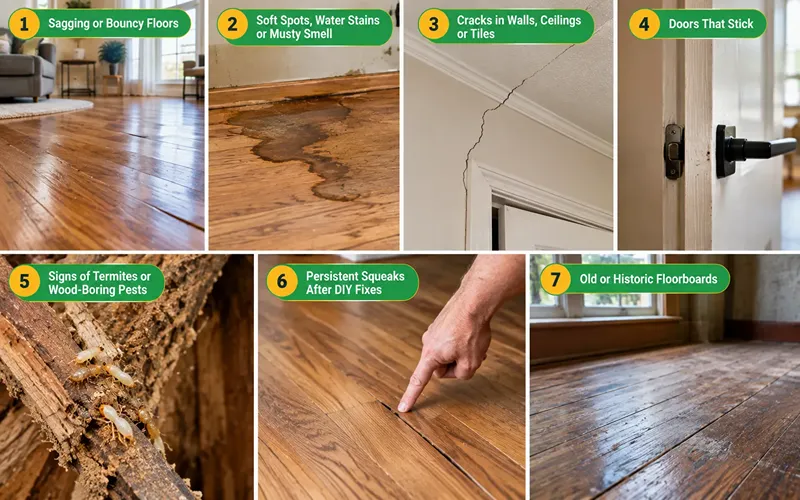
Many squeaks are simple DIY jobs, but some are signs of a deeper problem. Call a flooring contractor or builder if you notice any of the following.
Floors that sag, dip, or feel bouncy across a large area can point to weak or damaged joists that need structural support. Soft spots, water stains, or a musty smell may mean rot or a hidden leak. Cracks in nearby walls, ceilings, or tiles, or doors that suddenly stick, can signal the house is settling or shifting. Signs of termites or other wood-boring pests always need expert attention.
It’s also wise to get help if you’ve tried the usual fixes and the squeak keeps coming back, or if your home has old or historic floorboards. Original timber floors can be easily damaged by DIY repairs, and an experienced professional can often reduce the noise without harming the boards.
How to Prevent Squeaky Floors
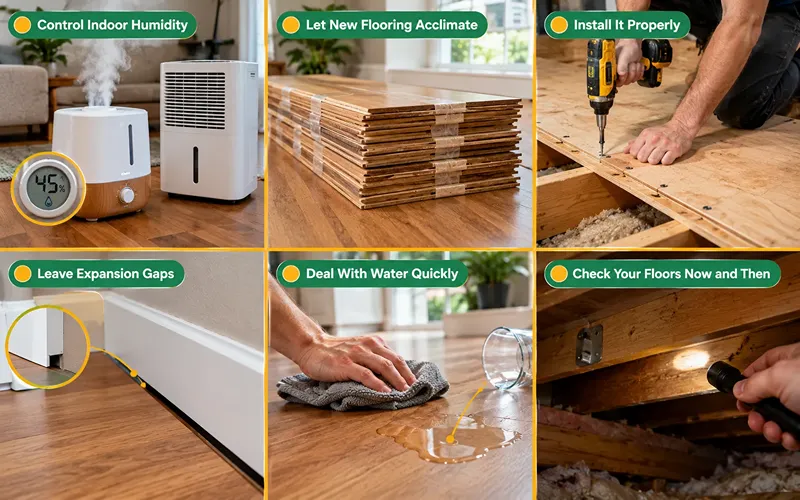
You can’t stop wood from moving completely, but you can keep squeaks to a minimum.
Control indoor humidity. Keeping humidity fairly steady helps stop boards from shrinking and swelling. Many flooring makers suggest a range of roughly 35 to 55 percent, but check the guidance for your specific floor. Use a humidifier in dry months and a dehumidifier or air conditioning in humid ones.
Let new flooring acclimate. Before installation, leave wood flooring in the room it’s going into so it can adjust to the temperature and moisture levels.
Install it properly. A subfloor that is glued and screwed to the joists is far less likely to squeak than one that is only nailed. Make sure the subfloor is flat and that fasteners are spaced correctly and hit the joists.
Leave expansion gaps. Wood and floating floors need a small gap around the edges of the room so they can expand without pushing against the walls.
Deal with water quickly. Wipe up spills right away and fix leaks promptly. Moisture can warp boards and weaken the subfloor.
Check your floors now and then. A quick look under the floor once or twice a year can help you catch loose fasteners, small gaps, or moisture before they turn into bigger problems.
Final Thoughts
Learning how to fix squeaky floors is mostly about finding the cause. Once you know whether the noise comes from a loose board, a gap under the subfloor, or boards rubbing together, the fix is usually quick and inexpensive. Start with the simplest method, work from below whenever you can, and don’t hesitate to call a professional if you see signs of a bigger problem. With a few tools and a little patience, you can enjoy a quiet, solid floor again.
Frequently Asked Questions
Are squeaky floors a sign of structural damage?
Usually not. Most squeaks are caused by normal wood movement and loose fasteners. However, squeaks combined with sagging, bouncy spots, or soft areas should be checked by a professional.
Can I fix a squeaky floor without getting underneath it?
Yes. You can screw or nail hardwood boards down from above, use a breakaway screw kit for carpeted floors, or use powder to quiet boards that rub together.
Why does my floor squeak more in winter?
Dry winter air causes wood to shrink. This opens small gaps between boards and between the subfloor and joists, giving the floor more room to move.
How long does it take to fix a squeaky floor?
A single squeak can often be fixed in under an hour. Larger areas, or repairs that involve adding blocking between joists, can take longer.