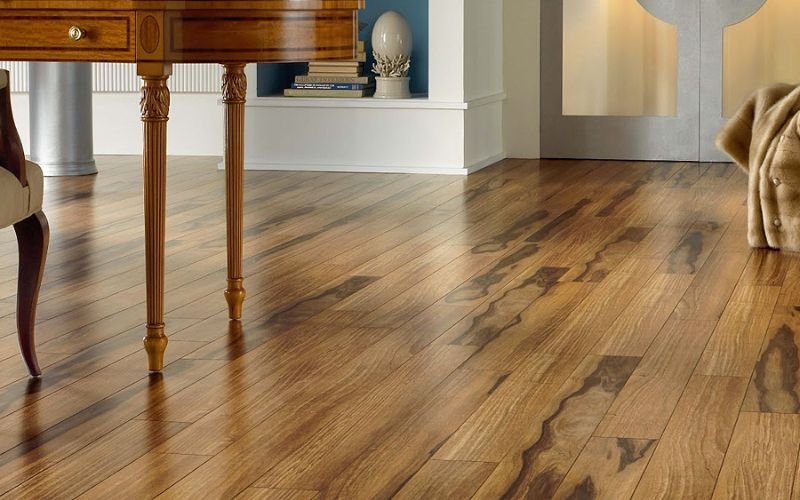
Vinyl flooring is one of the most popular choices for every homeowner in 2026. They are available in a variety of options, such as sheets, tiles, and planks, to meet every interior need. So, if you are looking for answers regarding what is vinyl flooring? Then look at the details given below for your information. You need to know the pros and cons of vinyl flooring before purchasing it. It seems like the cost of vinyl flooring is high due to its durability and longevity, but that’s not right. If you carefully look at the vinyl flooring installation guide, then you will get the idea about the cost. So begin your information journey by getting the idea of vinyl flooring.
About Vinyl Flooring
Vinyl flooring in Dubai is one of the best floorings due to its water-resistant and durable features. Due to its PVC, plasticizers, and synthetic materials, this flooring is suitable for both commercial and residential applications. It is one of the most effective and easiest-to-install types of flooring. It also mimics the natural stone and wooden texture perfectly. You can achieve underfoot comfort with this soft, low-maintenance flooring.
Definition of Vinyl Flooring
Vinyl flooring is a highly resilient floor composed of PVC and other synthetic materials. They are organized in multiple layers to provide the best functional floor. These layers are aligned with the top wear layer, the photographic layer, the design layer, and the rigid core. Lastly, a backing layer is added to cover the uneven surface, providing insulation and foot comfort.
What Is Vinyl Flooring Made Of?
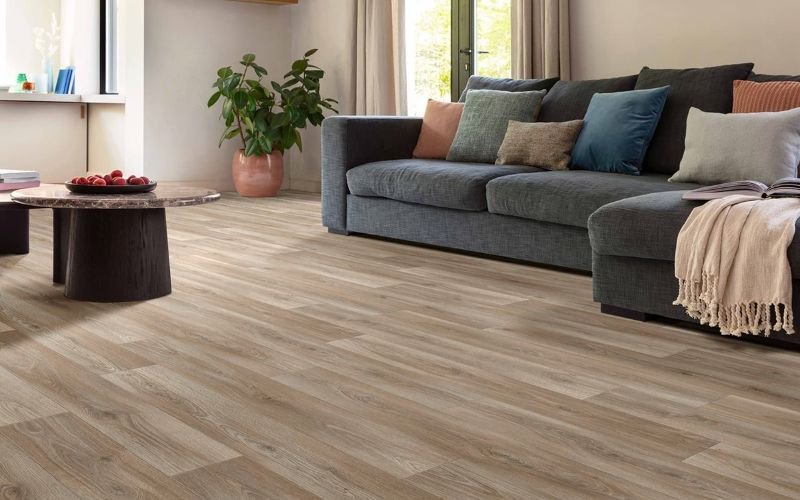
Vinyl flooring is a bi-component of polyvinyl chloride, plasticizers, pigments, and stabilizers. They are the best structural components for providing water-resistant, durable flooring in Dubai. Its unique layering gives extreme resistance against dents and stains. Here is the breakdown of its components.
- The key element is a synthetic plastic polymer.
- Multiple additives such as; stabilizers, plasticizers, and pigments.
- Its core layer is made of limestone and wood.
- The decor layer mimics a stone-and-wood print.
- The wear layer has a polyurethane coating to prevent spills and stains.
Types Of Vinyl Flooring
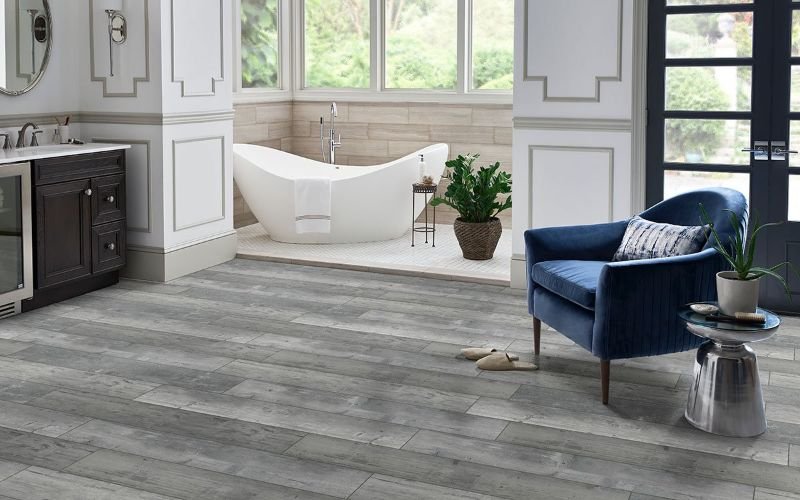
Mainly, three types of vinyl flooring are waterproof, long-lasting, and cost-effective. Look at the varieties below.
Luxury Vinyl Plank
LVP flooring is highly durable and wood-like. LVP is easy to install via the Click-lock method. It provides comfort and luxury appeal.
Luxury Vinyl Tiles
One of the ideal LVT flooring for mimicking the ceramic and porcelain tiles. These tiles are ideal for moist areas such as the kitchen and bathroom.
Sheet Vinyl Flooring
Due to large rolls of flooring, you can achieve a seamless look. From 6 to 12, they are wider to upgrade the living room and hallways.
Rigid Core Vinyl
These are 100% waterproof flooring types that prevent moisture and mold growth. Rigid core vinyl flooring features SPC and WPC cores, making it perfect for high-traffic areas.
Pros Of Vinyl Flooring
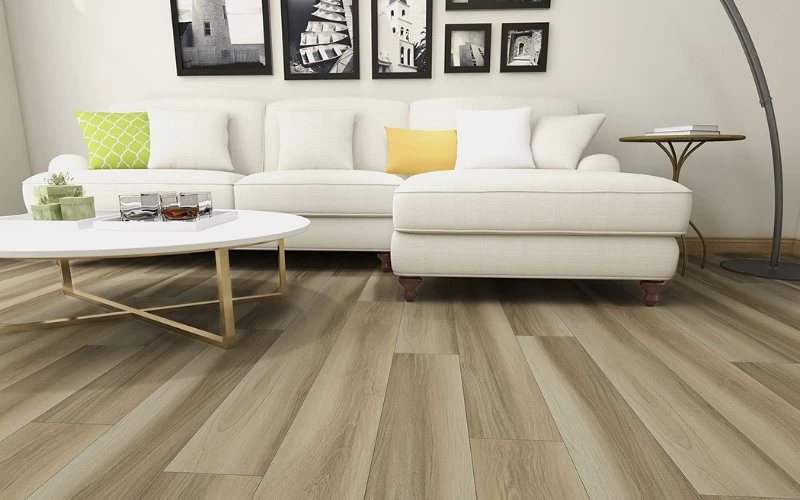
Whether in a traditional or modern home, you will find various advantages to installing these floors. View the perks below.
100% Waterproof flooring options
If you have moisture areas in your home, then purchase waterproof flooring. They give 100% protection against dampness and mildew. It is one of the best floorings for kitchens as they do not swell. Besides, you can install the best flooring for the bathroom to attain a spill-free and anti-slip surface.
Affordable Compared To Hardwood
If you are looking for affordable flooring ideas, then opt for vinyl flooring. As this flooring is cheaper than wooden and hardwood flooring. Due to the durable material and cheaper constructions, they are budget friendly options.
Easy Installation
These are easy-to-install flooring options for residential and commercial usage. This glue-down vinyl flooring gives superior results especially for high-traffic spaces.
Low Maintenance
Vinyl tiles and planks have 4 layers of construction that prevent stains and scratches. They require minimal to no cleanup, and no sealant or polishing is required for their maintenance.
Durable & Scratch-Resistant
As the durable flooring options vinyl is ranked on top. Further, they are scratch-resistant and a highly resilient flooring option. SPC composition is built to withstand dents.
Comfortable Underfoot
Vinyl tiles are made to offer warmth underfoot. This flooring is softer and more cushioned due to various layers of vinyl. So you can walk without hurting your joints.
Cons Of Vinyl Flooring
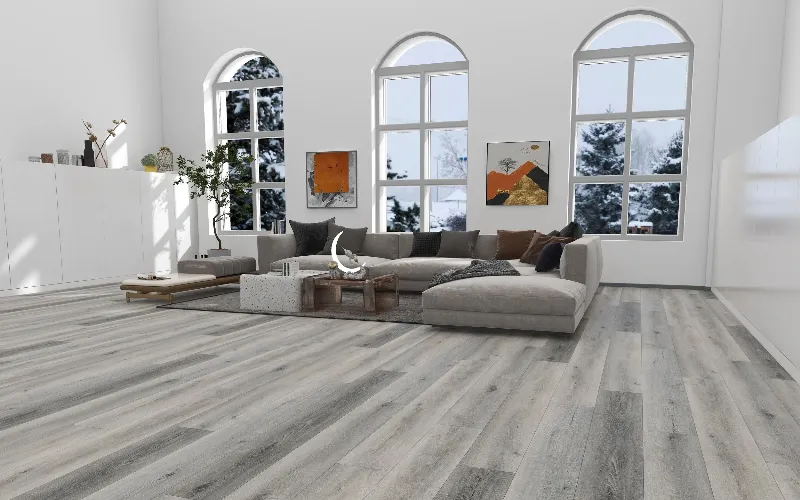
Vinyl flooring gives plenty of advantages and also has some disadvantages. Look at the cons listed below.
Can Be Damaged By Heavy Furniture
Vinyl is one of the softer surfaces that can be damaged by heavy furniture. When you drag a sofa or a table, it causes dents on flooring. To avoid this, you need to add furniture pads.
Not As Eco-Friendly As Natural Materials
Usually, vinyl is made from non-biodegradable materials, which can harm the environment. Due to VOC emissions and synthetic materials, these are not suitable for an environmental setting.
May Lower Home Resale Value Compared To Hardwood
Vinyl floor is comparatively lower quality than hardwood. That is why it requires maintenance and repair. Property buyers are not attracted to the property with moderate-level flooring.
Difficult To Repair
Vinyl planks and tiles are difficult to repair by sanding. For a damaged tile, you need to replace that tile instead of replacing the complete flooring.
Can Fade With Direct Sunlight Exposure
They are the worst choice for sunrooms, due to long-term sun exposure and fading. This flooring can turn yellow and discolor with the harmful UV rays.
Vinyl Flooring Installation Guide
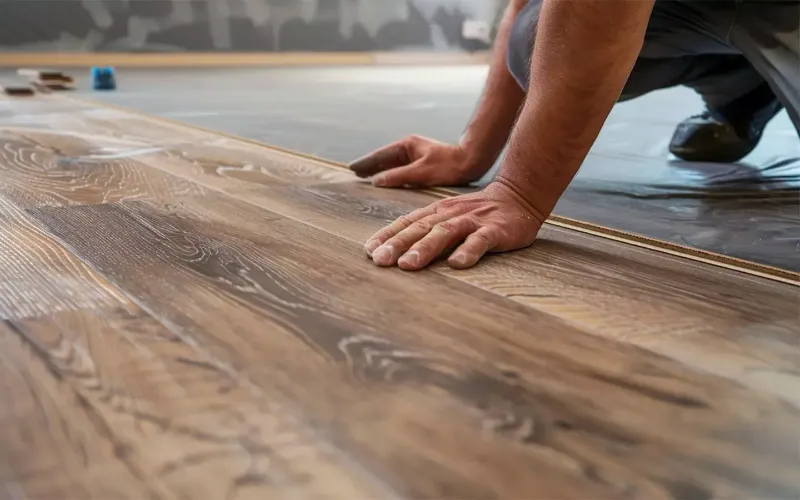
If you want a 100% accurate guide for installing vinyl flooring, view the step-by-step guide below.
Tools And Materials
- Pull Bar
- Underlay
- Spacer
- Vinyl Planks
- T-square
- Knife
- Rubber Mallet
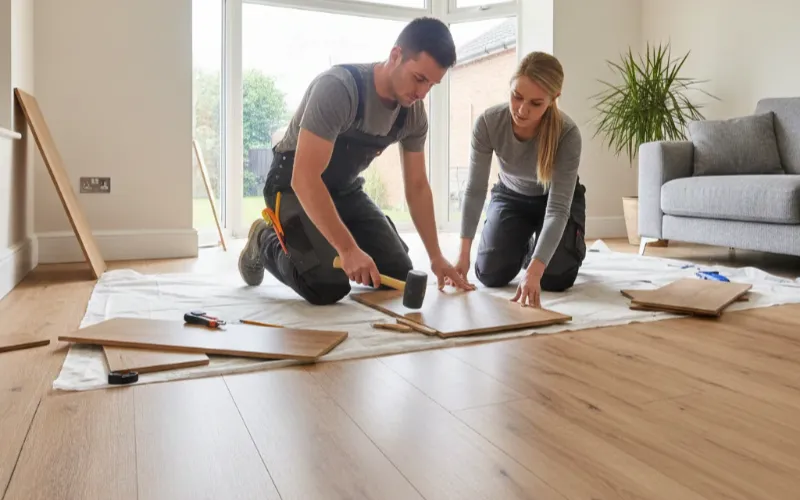
Step 1: Prepare The Subfloor
Initially, level the floor surface and fill all the gaps. After that, install the underlay to provide underfoot insulation. Check the dryness level to avoid mold and mildew growth.
Step 2: Acclimate The Vinyl Planks
You need to keep the vinyl planks and tiles at room temperature for at least 48 hours. By doing this, the flooring will absorb moisture and acclimate to the surrounding environment.
Step 3: Plan The Layout
Align the vinyl planks parallel to the longest wall. Do not cut the wrong pieces; measure first.
Step 4: Install The First Row
Keeping the spacer against the wall, maintain a distance of at least ¼ inch. Choose the tongue side that faces the wall and start the installation process.
Step 5: Continue Installation
Start placing the planks side by side to cover the gaps. Try to use the leftover pieces of planks to cover the missing areas.
Step 6: Trim And Finish Edges
Hold a jigsaw and trim the corners of your flooring planks. Make sure to cut the door jambs and pipes to expand the space. Lastly, remove the spacer and fit the baseboard to cover the gaps.
Conclusion
Vinyl flooring is a 4-layer, highly durable type of flooring that provides underfoot comfort, illumination, and floor protection. It offers several advantages, including waterproofing, under-floor heating, and easy installation. They are available in vinyl tiles, planks, sheets, and rigid core. If you have a villa, apartment, office, retail store, or hotel, this is an ideal option for your space. Along with benefits, it gives multiple advantages, such as VOC emission, low resale value, and sun damage. You can install perfect vinyl flooring by following the above steps. Start with gathering the tools, through floor preparation, to planks fitting. Once you know all the pros and cons of vinyl flooring, you are ready to purchase.