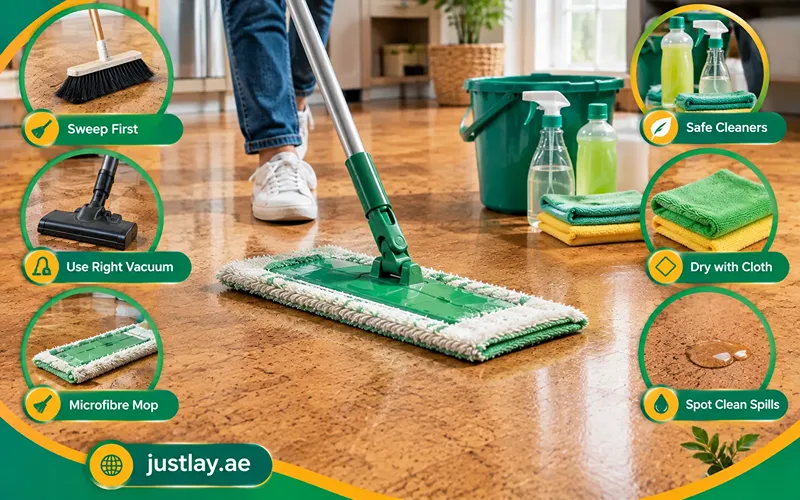
Cork flooring is one of those materials people fall in love with the moment they walk on it. It’s warm underfoot, quiet, springy, and made from bark that grows back, which is why so many homeowners choose it over laminate or tile. But cork is also softer and more porous than most floors, and that changes the rules a little.
If you clean cork the way you’d clean vinyl or ceramic tile, you can dull the finish, swell the seams, or leave permanent marks. If you clean it correctly, a cork floor can look good for twenty years or more with very little effort.
This guide explains how to clean cork flooring in Dubai the safe way: the tools you need, the exact steps for routine and deep cleaning, how to handle stains and spills, and the everyday habits that keep the floor looking new. It also covers the mistakes that quietly damage cork over time, so you can avoid them from day one.
Why Proper Cork Floor Cleaning Matters
Cork isn’t fragile, but it is different. Understanding why helps every other step in this guide make sense.
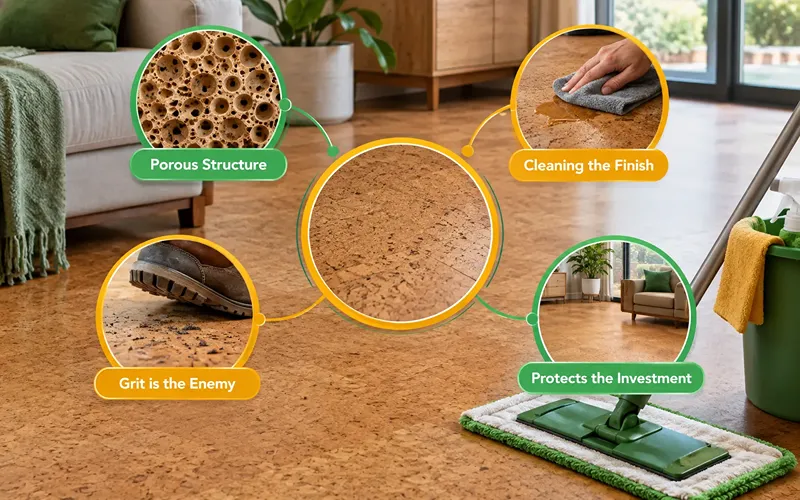
Cork is porous and full of air
Cork is made up of millions of tiny sealed air cells. That structure is what gives the floor its cushioning, insulation, and sound absorption. It also means cork can absorb moisture if water reaches the raw material through worn finish, damaged seams, or gaps at the edges of the room. Absorbed water leads to swelling, lifting edges, cupping, and in bad cases mould underneath.
You’re really cleaning the finish, not the cork
Almost every cork floor sold today comes sealed with a protective top coat, usually a water-based polyurethane or urethane finish, sometimes wax or oil on older and traditional tile floors. That coat is the barrier between your floor and everything you spill on it. Harsh cleaners, abrasive pads, and steam all attack the finish first. Once the finish thins out, the cork underneath is exposed, and repairs become far more expensive than a bottle of the right cleaner ever would have been.
Grit is the number one enemy
Sand, dust, and small stones tracked in on shoes act like sandpaper. Every step grinds them into the finish. This is the single biggest cause of dull, worn-looking cork floors, and it’s also the easiest thing to prevent. Sweeping regularly does more for a cork floor’s lifespan than any product you can buy.
Good cleaning protects the investment
Cork flooring is not cheap. A sensible cleaning routine keeps the finish intact for years, delays the day you need to refinish, and preserves the warmth and colour that made you choose cork in the first place. The routine below takes a few minutes a week.
Know Your Finish Before You Start
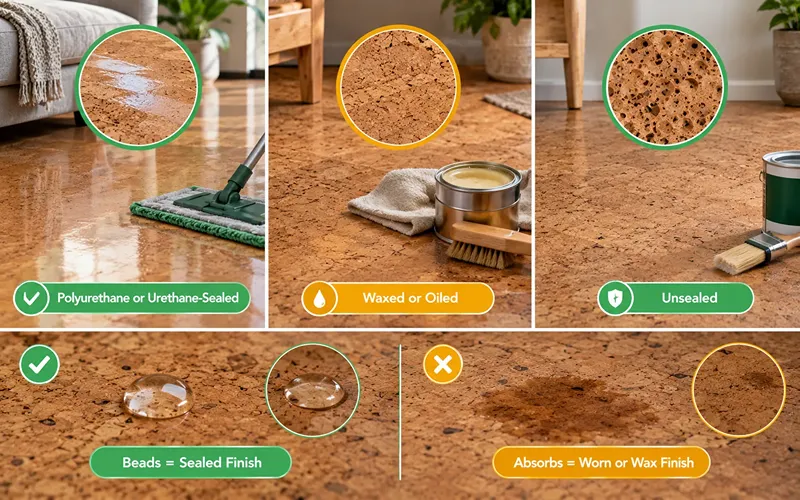
Before you clean, find out what’s on top of your floor. It changes which products are safe.
Polyurethane or urethane-sealed cork is the most common today. It’s slightly glossy or matte, water-resistant on the surface, and cleans with a damp mop and a pH-neutral cleaner. Never use wax on it, wax on a urethane finish creates a cloudy, sticky film that has to be stripped off.
Waxed or oiled cork is found on older floors and some traditional glue-down tiles. It has a softer, more natural look and feel. This type needs occasional re-waxing or re-oiling, and it dislikes water even more than sealed cork.
Unsealed cork should be sealed as soon as possible. Until then, clean it dry only.
If you don’t know which you have, put a drop of water in an out-of-the-way corner. If it beads and sits there, you have an intact sealed finish. If it darkens the surface or soaks in within a minute or two, the finish is worn or the floor is wax-finished, and you should be extra careful with moisture.
Tools and Cleaning Products You’ll Need
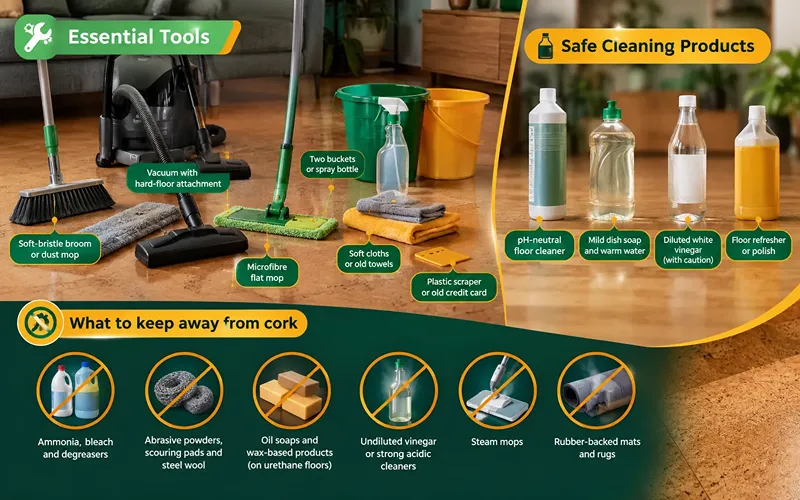
You don’t need much. Most of it you probably already own.
Essential tools
- A soft-bristle broom or dust mop. For daily debris. Microfibre dust mops pick up fine dust that brooms push around.
- A vacuum with a hard-floor attachment. Make sure you can switch off the rotating beater bar, those stiff bristles scratch cork finishes. A canister vacuum with a felt or soft brush head is ideal.
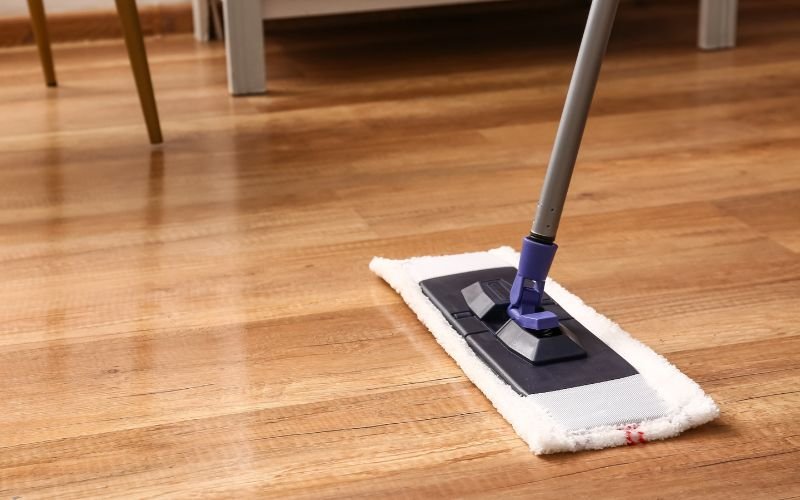
- A microfibre flat mop. Microfibre holds far less water than a string or sponge mop, which is exactly what you want on cork.
- Two buckets or a spray bottle. A spray bottle is genuinely better for cork: you mist a small area and mop it, so the floor never gets soaked.
- Soft cloths or old towels. For drying, spot cleaning, and blotting spills.
- A plastic scraper or old credit card. For lifting dried-on messes without gouging the finish.
Safe cleaning products
- A pH-neutral hardwood or cork floor cleaner. This is the safest and simplest choice. Anything labelled for sealed wood or urethane finishes will normally work on sealed cork. Check the manufacturer’s recommendation first if your floor is still under warranty, some brands specify a particular cleaner, and using something else can affect the warranty.
- Mild dish soap and warm water. A few drops in a bucket of warm water is a perfectly good homemade solution for sealed cork. Use less soap than you think you need; too much leaves a dulling residue.
- Diluted white vinegar (with caution). Roughly a quarter cup of white vinegar in a litre of warm water is a popular natural option and works fine on many sealed floors. Vinegar is mildly acidic, though, so it isn’t ideal for frequent use on urethane finishes and should be avoided entirely on waxed cork. Test it in a hidden corner first, and if your floor is newer, stick with a pH-neutral cleaner instead.
- Floor refresher or polish designed for your finish type. Used once or twice a year to top up the protective layer.
What to keep away from cork
- Ammonia, bleach, and general-purpose degreasers, they break down the finish.
- Abrasive powders, scouring pads, and steel wool.
- Oil soaps and wax-based products on urethane-finished floors.
- Undiluted vinegar or strong acidic cleaners.
- Steam mops. More on this below, but the short version is: never.
- Rubber-backed mats and rugs, which trap moisture and can permanently discolour cork.
How to Clean Cork Flooring: Step-by-Step
This is the routine that handles ordinary weekly cleaning. It takes about fifteen minutes for an average room.
Step 1: Clear the floor and dry-clean first
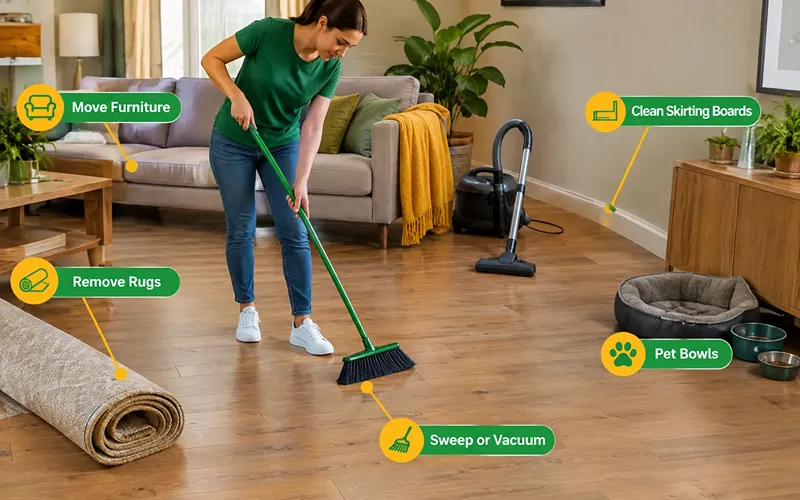
Move small furniture, rugs, and pet bowls out of the way. Sweep or vacuum the whole area, including under furniture and along the skirting boards where grit collects. Never skip this. Mopping over grit just drags it across the finish in wet circles.
Step 2: Mix a gentle solution
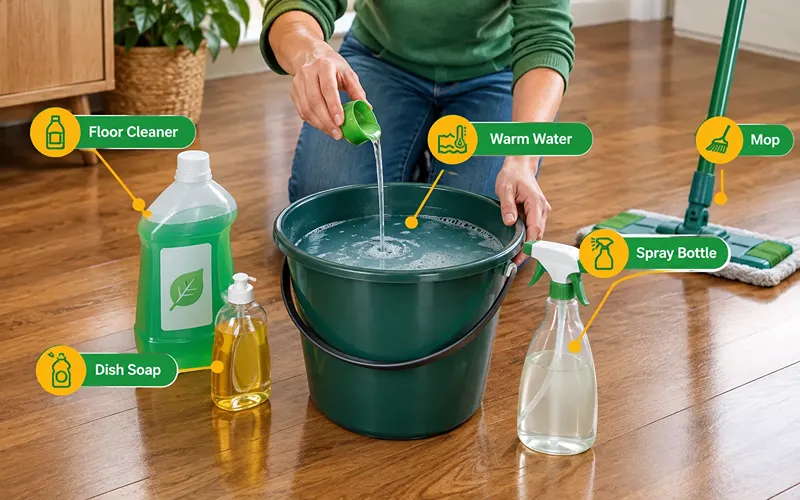
Fill a bucket with warm water and add either a capful of pH-neutral floor cleaner or two or three drops of mild dish soap. If you prefer a spray-and-mop method, put the same solution in a spray bottle. Warm water works better than hot, very hot water can soften some finishes.
Step 3: Wring the mop until it’s barely damp
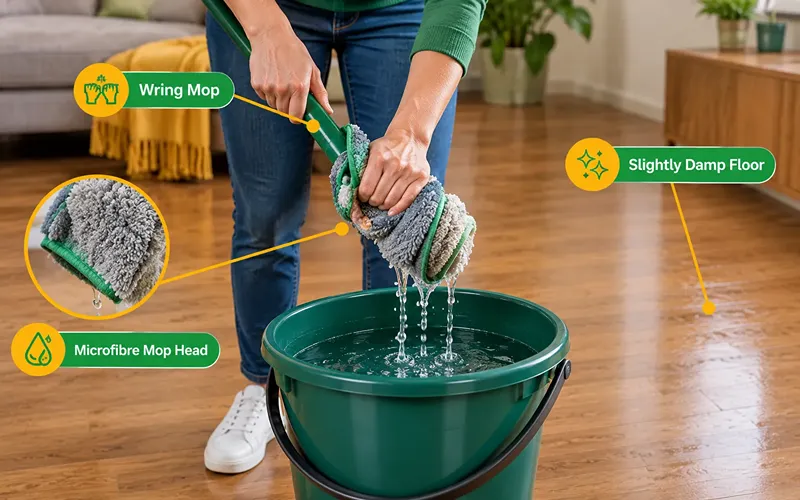
This is the most important step in the whole process. Dip the microfibre mop head, then wring it out hard. If you can squeeze water out of it, it’s too wet. The floor should look very slightly damp behind you and dry within a minute or two on its own.
Step 4: Mop in sections, following the grain
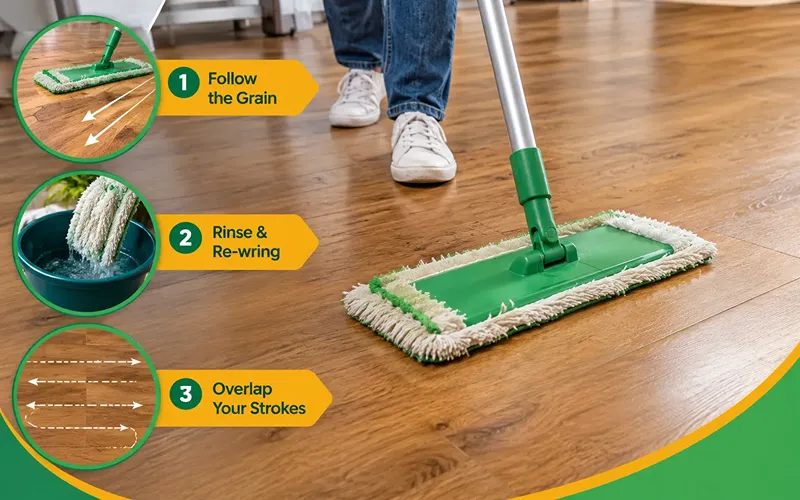
Work in areas of about one square metre at a time. Move the mop in the direction of the cork’s pattern or plank length. Overlap your strokes so you don’t leave streaks. Rinse and re-wring the mop head every few sections, a dirty mop just redistributes grime.
Step 5: Deal with sticky spots gently
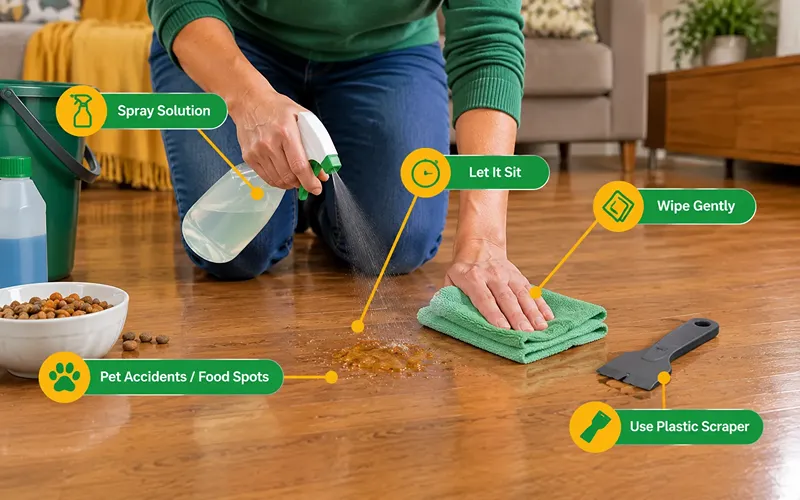
For dried food, pet accidents, or scuffs, mist the spot with your solution, let it sit for thirty seconds to soften, then wipe with a soft cloth. Use a plastic scraper for anything stubborn. Don’t scrub hard and don’t reach for an abrasive pad.
Step 6: Dry the floor
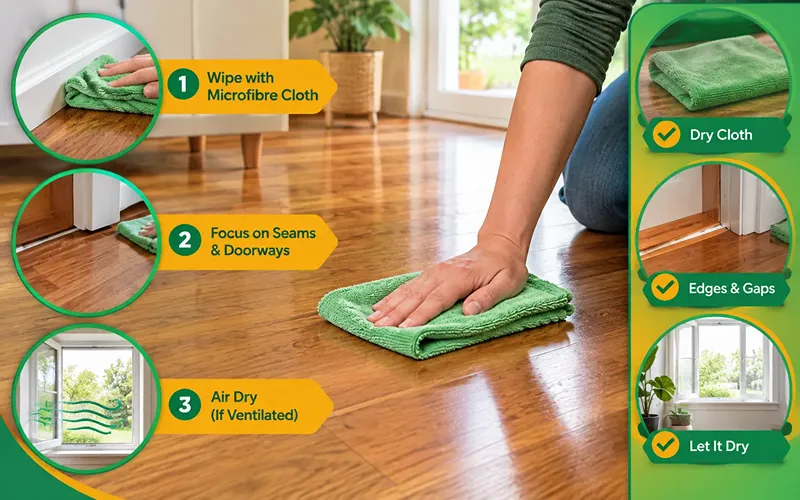
Go over the surface with a dry microfibre cloth or towel, especially near seams, doorways, and around any gaps. If the room is well ventilated, opening a window and letting it air dry for a few minutes is enough. Wait until the floor is completely dry before putting rugs or furniture back.
How to Deep Clean Cork Flooring
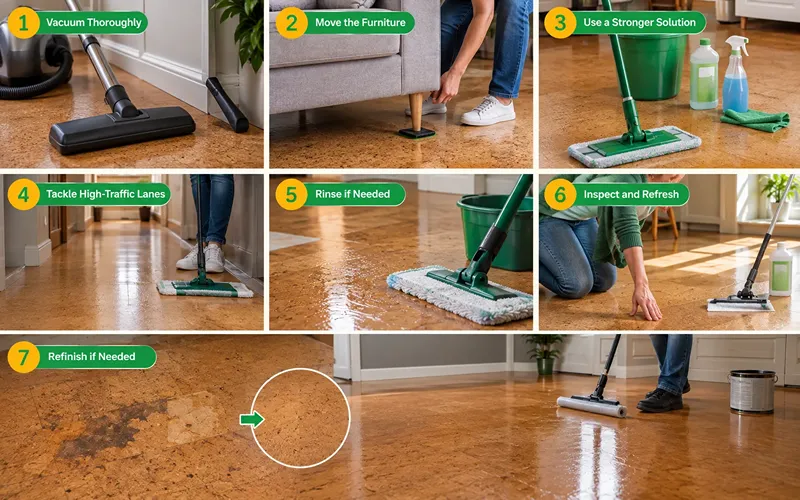
A deep clean is worth doing once or twice a year, or before you re-coat the finish. It’s not a harsher clean, it’s a more thorough one.
- Vacuum thoroughly, including edges and corners. Use a crevice tool along skirting boards and in door thresholds where compacted grit hides.
- Move the furniture. Deep cleaning is only useful if you get under the sofa and the dining table. Lift furniture rather than dragging it; sliders or a helping hand save your finish.
- Work in small sections with a slightly stronger solution. Use your usual cleaner at the concentration recommended for heavy soil, not double strength. Mist, let it dwell for about a minute, then wipe with a damp microfibre pad and dry immediately.
- Tackle high-traffic lanes separately. Entryways, kitchen work triangles, and hallways collect a greyish film that ordinary mopping doesn’t lift. Go over these twice with clean pads rather than scrubbing once with force.
- Rinse if you’ve used soap. Soap residue attracts dirt and dulls the surface. Go over the whole area with a barely damp mop of plain warm water, then dry.
- Inspect and refresh the finish. Once the floor is clean and dry, look at it in raking light from a window. If the sheen is patchy, or bare-looking spots have appeared in traffic lanes, it’s time to apply a floor refresher or polish made for your finish type. Products like water-based wood floor refreshers restore the protective layer and even out the shine, and are usually applied thinly with a flat applicator and left to cure for a few hours.
- Know when refreshing isn’t enough. If the finish has worn through to bare cork in places, or you can see dark absorbed stains, the floor needs proper refinishing: a full clean with a preparation product, then two coats of a durable waterborne floor finish. Many homeowners hire a professional for this. Done properly, it makes a tired cork floor look close to new.
Stain and Spill Removal on Cork Floors
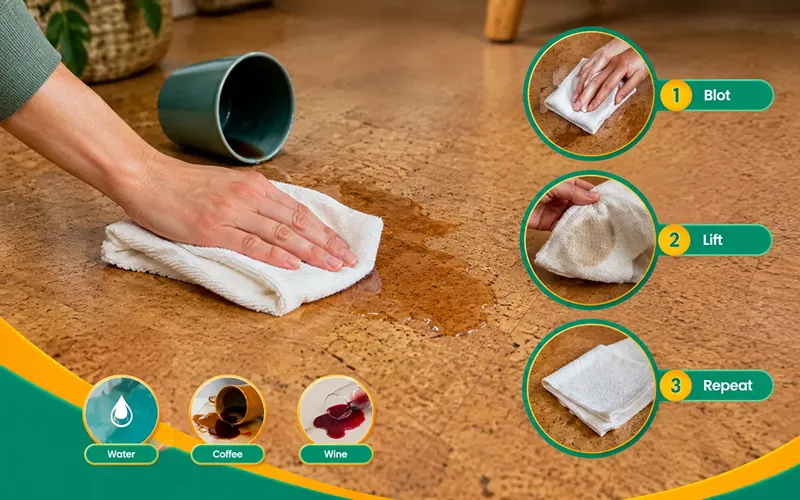
Speed matters more than technique. Almost anything comes off sealed cork if you get to it in the first few minutes. Almost nothing comes off easily once it has sat overnight.
The universal first move: blot, don’t wipe. Wiping spreads a spill into a wider area and pushes liquid toward the seams. Press a dry cloth down, lift, repeat with a clean part of the cloth.
Common household stains
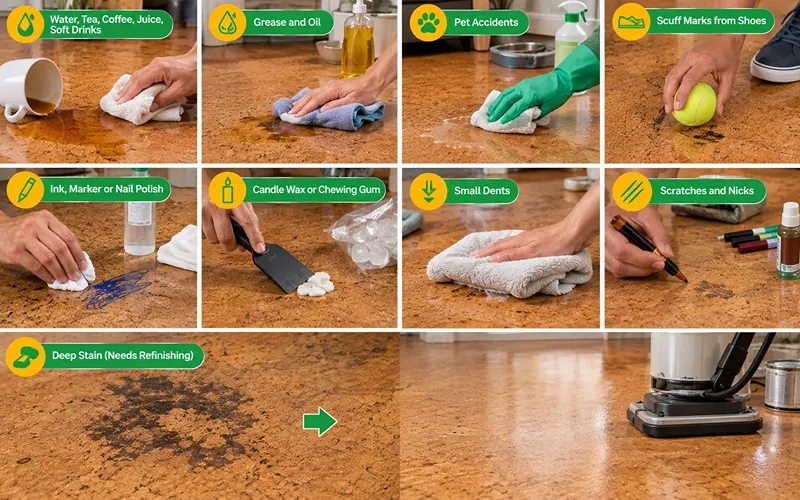
- Water, tea, coffee, juice, soft drinks. Blot immediately, then wipe the spot with a barely damp cloth and mild cleaner, and dry. Coffee and red wine can tint the finish if left, so don’t wait.
- Grease and oil. Wipe up the excess, then clean the area with warm water and a drop of dish soap, which cuts grease without harming the finish. Dry thoroughly.
- Pet accidents. Blot up all liquid first, then clean with an enzyme cleaner that is safe for sealed wood floors. Enzymes break down odour compounds that plain soap leaves behind. Dry the area well and check the seams.
- Scuff marks from shoes. A clean tennis ball or a soft eraser rubbed lightly will usually lift black rubber marks without any product at all.
- Ink, marker, or nail polish. Try your normal cleaner first. If that fails, dab, do not rub, with a cloth barely moistened with isopropyl alcohol, then rinse the spot with a damp cloth and dry. Test in a hidden area first, because alcohol can soften some finishes.
- Candle wax or chewing gum. Harden it with an ice cube in a plastic bag, then lift it off with a plastic scraper.
- Small dents. Cork’s air cells often bounce back. Lay a warm, slightly damp cloth over the dent for a short while and the cork may recover on its own. Don’t soak it, and don’t repeat this often.
- Scratches and nicks. These are repairable much like hardwood, using a colour-matched touch-up kit or wood filler followed by a spot coat of finish.
If a stain has soaked past the finish into the cork itself, surface cleaning won’t fix it. That area needs sanding and refinishing, or in severe cases, plank replacement.
Daily and Long-Term Care for Cork Floors
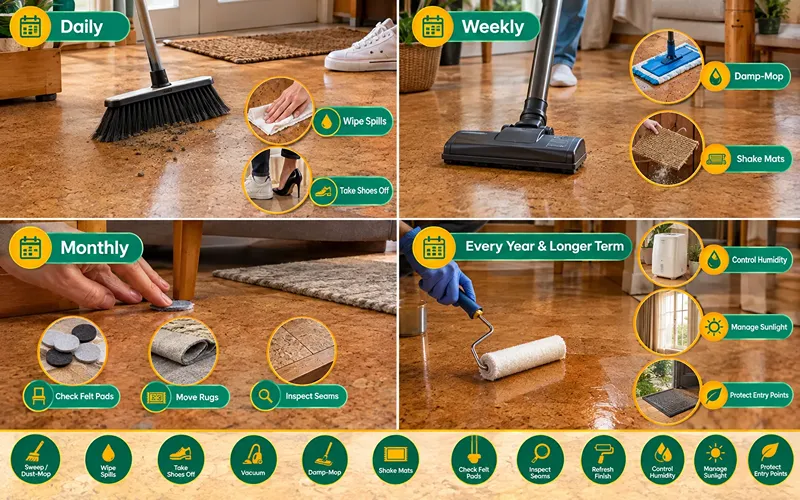
Every day
- Sweep or dust-mop high-traffic areas, especially entrances and kitchens.
- Wipe spills as they happen rather than at the end of the day.
- Take shoes off at the door where you can. Stiletto heels and grit-filled treads do more damage to cork than anything else.
Every week
- Vacuum the whole floor with the beater bar off.
- Damp-mop with your pH-neutral cleaner using the six steps above.
- Shake out entrance mats so they stop holding grit against the floor.
Every month
- Check felt pads under furniture legs and replace any that have flattened or fallen off.
- Move rugs slightly so the floor beneath ages evenly.
- Look over seams, thresholds, and the area near sinks and dishwashers for any early signs of moisture.
Every year, and longer term
- Refresh the finish. A yearly coat of an appropriate refresher keeps the protective layer thick. How often you need it depends on traffic; a well-maintained finish can last several years before it needs full refinishing.
- Re-wax or re-oil if you have a wax-finished floor, following the product instructions.
- Refinish when wear shows. Watch traffic lanes for dullness and bare patches, and act before the cork itself is exposed.
- Control humidity. Cork is happiest in a normal indoor range of roughly 40–60% relative humidity. Very dry air can shrink planks and open gaps; very humid air can swell them. A humidifier in winter or a dehumidifier in a damp basement helps.
- Manage sunlight. Cork is a natural material and can lighten or fade under strong, direct sun. Blinds, sheer curtains, or UV-filtering window film during the brightest hours will keep the colour even. Moving rugs occasionally prevents obvious light and dark patches.
- Protect entry points. Place breathable mats at every external door. Avoid rubber or latex backings, which trap moisture and can stain cork permanently. Woven or felt-backed mats are the safer choice.
Common Cork Floor Cleaning Mistakes to Avoid
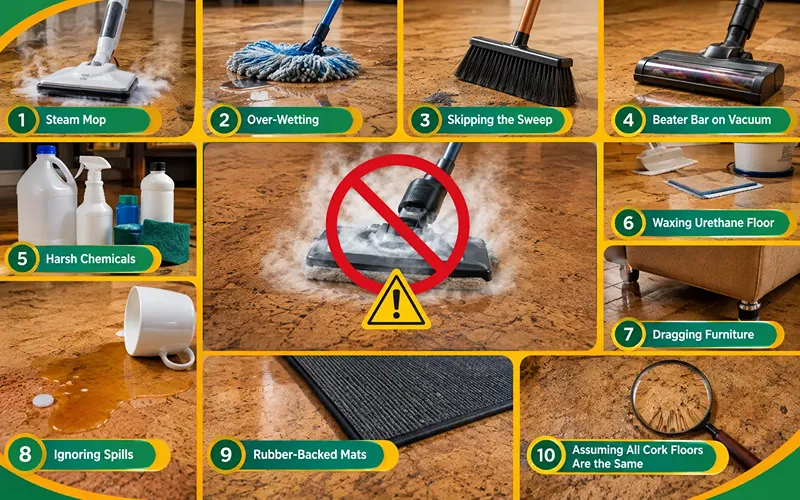
Using a steam mop. This is the most damaging mistake and also the most common. Steam forces hot moisture through the finish and into the cork, where it causes swelling, seam separation, adhesive failure on glue-down floors, and mold underneath. No amount of convenience is worth it.
Over-wetting the floor. Sloshing water from a string mop, letting puddles sit, or mopping with a soaking pad all push moisture toward the seams. Damp is enough. Wet is never necessary.
Skipping the sweep. Mopping over grit scratches the floor and makes the mop useless. Always dry-clean first.
Vacuuming with the beater bar on. Those stiff rotating bristles are designed for carpet. On cork they scuff the finish a little more each week.
Using harsh chemicals. Bleach, ammonia, and strong all-purpose sprays strip the protective coat and can discolour cork. So can abrasive powders and scouring pads.
Waxing a urethane-finished floor. It leaves a hazy, slippery film that has to be stripped before the floor can ever be recoated properly.
Dragging furniture. One heavy chair pulled across the room can leave a gouge that no amount of cleaning will fix. Lift, or use felt gliders and sliders.
Ignoring spills. Sealed cork gives you a grace period, not immunity. Anything left sitting will eventually work through.
Leaving rubber-backed mats in place. They look harmless and quietly discolour the floor beneath them.
Assuming all cork floors are the same. Always check what your manufacturer recommends, especially while your floor is under warranty.
Final Thoughts
Cleaning cork flooring comes down to three simple habits: sweep away grit before it can scratch, mop with a barely damp microfibre pad and a gentle pH-neutral cleaner, and dry the floor when you’re done. Add felt pads under furniture, breathable mats at the doors, and a refresher coat once a year, and you’ve covered almost everything a cork floor needs.
The mistakes that ruin cork floors aren’t dramatic. They’re small and repeated: the steam mop that seemed efficient, the bucket that was a bit too full, the spill left until morning. Avoid those, and cork rewards you with a floor that stays warm, quiet, and beautiful for years, with less work than most other flooring you could have chosen.
Frequently Asked Questions
Can you use a steam mop on cork flooring?
No. Steam drives moisture into the cork and damages both the finish and the material underneath. Stick to a barely damp microfibre mop.
Is vinegar safe on cork floors?
Well-diluted white vinegar, around a quarter cup per litre of warm water, is safe on many sealed cork floors and is a popular natural option. But vinegar is acidic, so avoid it on waxed or oiled cork, don’t use it as your everyday cleaner on urethane finishes, and always test it in a hidden spot first. A pH-neutral cleaner is the lower-risk choice.
How often should I mop my cork floor?
Once a week for most homes. Busy households with children or pets might mop high-traffic rooms twice a week, and quiet spare rooms every few weeks. Sweeping should be more frequent than mopping.
Can I use a regular hardwood floor cleaner?
Usually yes, provided it’s pH-neutral and made for sealed or urethane-finished floors. Avoid oil soaps and anything labelled as a wax or polish unless your floor is genuinely wax-finished.
Is cork flooring waterproof?
No. Sealed cork resists surface moisture well and handles spills that are wiped up quickly, but it isn’t waterproof. Standing water and steam will eventually get through, particularly at the seams.
Can cork flooring go in a bathroom or kitchen?
Kitchens are generally fine with a well-sealed floor and prompt spill cleanup. Bathrooms are riskier because of standing water and constant humidity, possible with careful sealing and good ventilation, but not the easiest choice.
How do I get rid of dents in cork?
Cork’s air cells often spring back on their own. A warm, slightly damp cloth laid over the dent for a short time can speed up recovery. Avoid overdoing the moisture.
How long does a cork floor last?
With good care, decades. Many cork floors carry long wear warranties on their factory finish, and refinishing can extend a floor’s life well beyond that.
Do I need to reseal cork flooring?
Yes, eventually. Most floors benefit from a refresher coat roughly once a year and a full refinish every several years, depending on traffic and how well the floor has been maintained.
Are robot vacuums safe on cork?
Generally yes, as long as the model uses soft rollers rather than a stiff beater bar. Avoid any robot that mops with a wet pad.