Bamboo flooring is tough, good-looking, and easier to care for than most people expect. The catch is that it is still a natural material. It reacts to water, grit, and harsh chemicals in ways that tile and vinyl do not.
The good news: cleaning bamboo floors takes about ten minutes a week once you have a routine. This guide covers the daily basics, a proper deep clean, stain fixes that actually work, the products worth buying, and the mistakes that quietly ruin bamboo floors over time.
First, Check What Kind of Bamboo Floor You Have
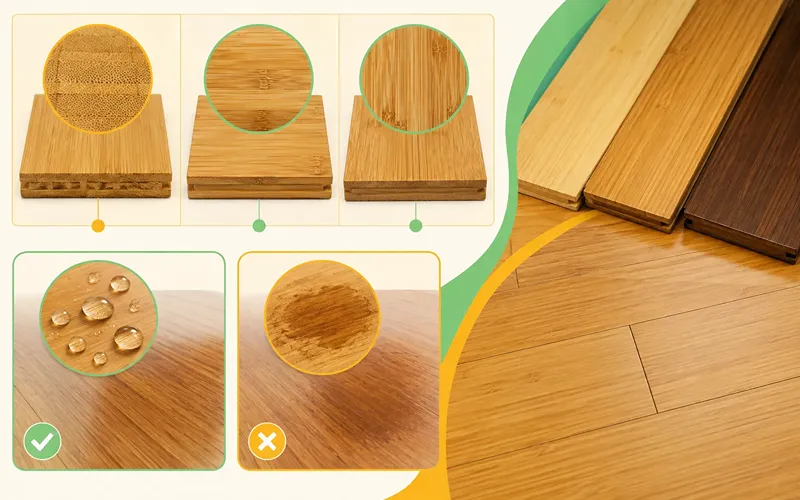
This step takes two minutes and saves a lot of guessing later. Not all bamboo is equally tough.
Strand-woven vs. horizontal or vertical bamboo
Strand-woven bamboo is compressed under high pressure and is extremely hard. It resists dents well.
Horizontal and vertical bamboo show the classic knuckle grain. They are softer and dent more easily, so grit under your shoes matters more.
Carbonized bamboo is heat-treated to get that darker caramel colour. The process softens it, so it scratches more easily than natural bamboo. Be gentler with it.
What finish is on top?
Most bamboo flooring in Dubai sold today come pre-finished with a factory-applied polyurethane or UV-cured coating. You are cleaning that coating, not the bamboo itself.
Some floors are oil-finished or site-finished instead. These need oil-safe cleaners and periodic re-oiling, not standard hardwood cleaners.
Put a few drops of water in a hidden corner. If the water beads up and sits there, you have a sealed surface finish. If it soaks in and darkens the wood within a minute or two, the floor is oiled or the finish has worn thin. Use less water and check with your manufacturer.
Keep your manufacturer’s care sheet if you still have it. Using an unapproved cleaner can void a flooring warranty, even if the cleaner did no visible damage.
What You’ll Need
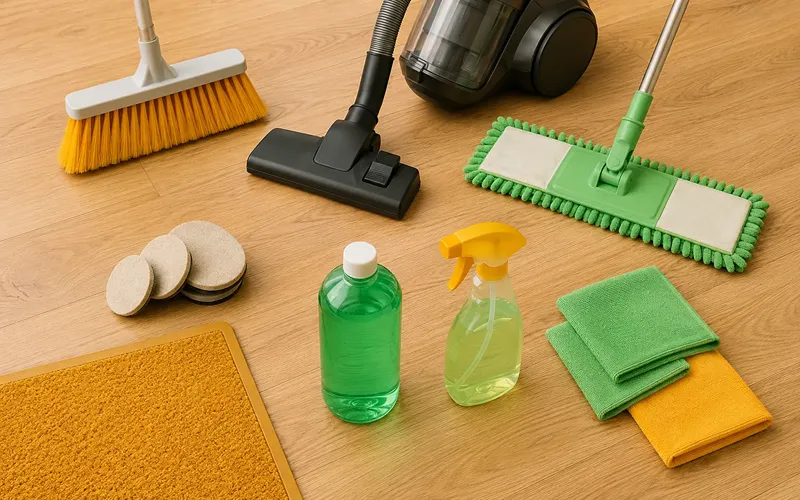
You do not need much:
- A soft-bristle broom or a microfiber dust mop
- A vacuum with the beater bar (brush roll) switched off, or a hard-floor attachment
- A flat microfiber mop with a washable pad
- Two or three microfiber cloths
- A pH-neutral bamboo or hardwood flooring cleaner
- A spray bottle, if your cleaner is a concentrate
- Felt pads and doormats for prevention
Skip the string mop and bucket. They put far too much water on the floor.
How To Clean Bamboo Flooring Day To Day
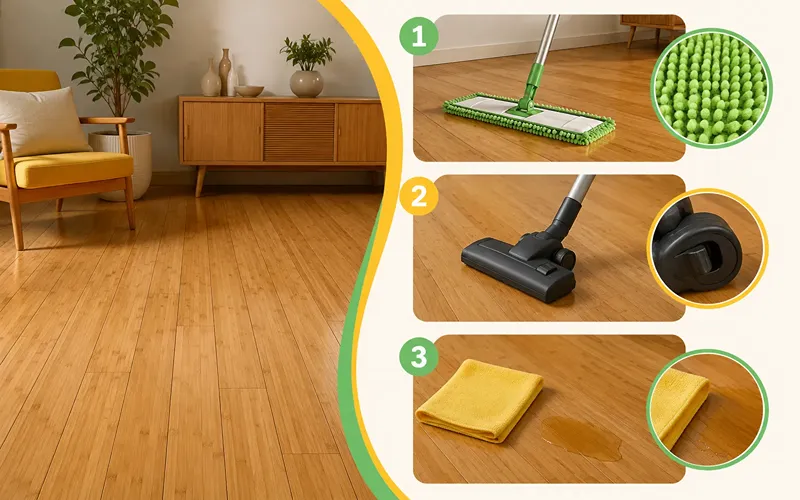
Daily care is mostly about removing grit before it does damage.
Sweep or dust mop most days
Dust, sand, and grit act like fine sandpaper under your shoes. Every step grinds them into the finish. A dry microfiber mop picks up more than a broom because the fibres hold the dust instead of pushing it around.
In a low-traffic home, two or three times a week is fine. With kids, pets, or a hallway that leads outside, do it daily.
Vacuum weekly, with the brush roll off
A vacuum reaches along skirting boards and under furniture where a mop cannot. Just make sure the rotating brush is off or the head is set to hard wooden flooring. Spinning bristles scuff bamboo finish over time.
Check the wheels too. Grit stuck in a vacuum wheel leaves fine scratch lines.
Wipe spills immediately
This is the single most useful habit for bamboo. Water that sits on a seam for an hour can swell the plank edge. Blot it up with a dry cloth, then dry the spot properly.
Weekly Damp Mopping: Step By Step
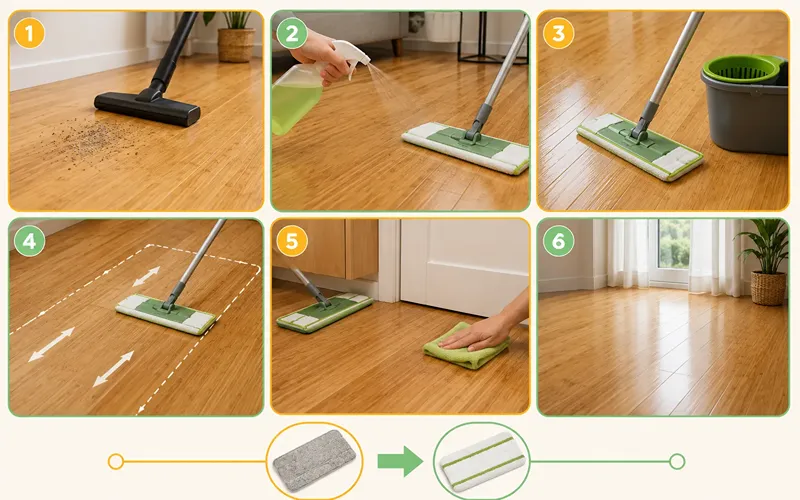
This is the routine clean that keeps bamboo looking fresh.
- Sweep or vacuum first. Mopping over grit drags it across the finish. Never skip this.
- Spray, don’t pour. Mist the cleaner onto the floor in small sections, or onto the mop pad. Never flood the floor and never tip cleaner straight from the bottle.
- Use a barely damp mop. If you are using a bucket, wring the pad until it feels almost dry to the touch. It should leave no visible puddle behind it.
- Work in sections and follow the grain. Do about a square metre at a time, moving with the direction of the planks. This avoids streaks and lets you spot missed marks.
- Dry as you go to problem spots. Around doors, sinks, and pet bowls, follow the mop with a dry microfiber cloth.
- Let it air dry fully. The floor should feel dry in a minute or two. If it stays wet longer than that, you used too much liquid.
Rinse or swap the mop pad when it looks grey. A dirty pad just spreads the dirt around.
How often? Once a week for most homes. Kitchens, hallways, and entryways may need it twice a week. Bedrooms can go a fortnight.
Deep Cleaning Bamboo Floors
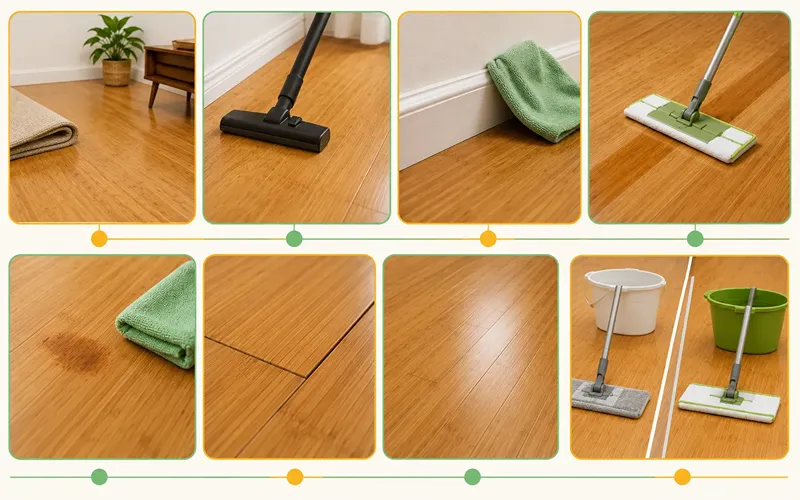
Every two to three months, or when the floor looks dull even after mopping, do a deeper clean.
- Move rugs, small furniture, and floor mats out of the room.
- Vacuum thoroughly, including corners, along skirting boards, and under radiators.
- Wipe the skirting boards and door frames with a damp cloth. Dust falls from there onto a floor you just cleaned.
- Mop as usual, but go over high-traffic paths twice with a clean pad.
- Work on any stains and scuff marks individually (see the next section).
- Check for gaps between planks, lifted edges, or squeaks and note anything that needs attention.
- Let the floor dry completely, then put felt pads back on before replacing furniture.
If your floor looks cloudy or hazy after this, that is almost always product build-up from an old soap or wax-based cleaner. Mop once with plain warm water on a barely damp pad to strip the residue, then go back to a pH-neutral cleaner from now on.
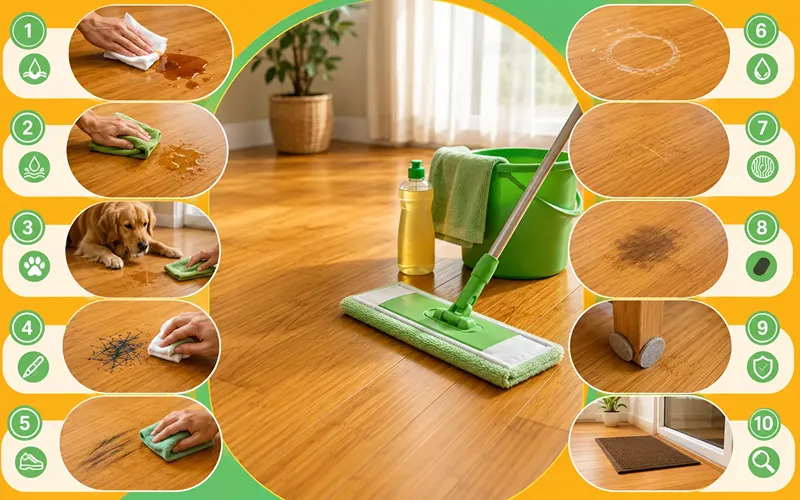
How To Remove Stains From Bamboo Flooring
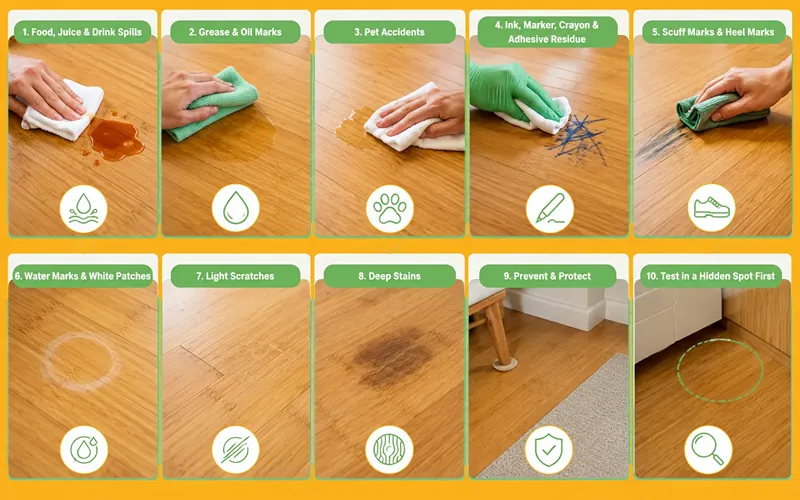
Always work from the outside of the stain toward the middle so you do not spread it. Test any new method in a hidden spot first.
Food, juice, and Drink Spills
Blot up the liquid first with a dry cloth. Then wipe with a cloth lightly dampened with floor cleaner and dry the area straight away. Dried-on food comes off with a plastic scraper or an old credit card, never a metal blade.
Grease and Oil Marks
Put a small amount of pH-neutral cleaner on a cloth, lay it over the mark for a few minutes, then wipe and dry. For stubborn kitchen grease, a drop of mild dish soap in warm water on a cloth works. Wipe the area with clean water afterwards so no soap film is left behind.
Pet Accidents
Speed matters here because urine is acidic and can etch the finish. Blot it dry, clean with your floor cleaner, then dry thoroughly. For lingering smell, an enzyme cleaner made for hard floors will break down the odour. Apply it to a cloth, not straight onto the boards.
If a dark stain has already soaked into the wood, the finish has been breached and that plank likely needs professional repair.
Ink, marker, crayon, and Adhesive Residue
Dab a small amount of rubbing alcohol onto a white cloth and blot gently. Do not rub hard and do not soak the area. Wipe with a damp cloth afterwards and dry. Test in a hidden corner first, as alcohol can dull some finishes.
Scuff marks and heel Marks
These sit on top of the finish, not in the wood. Rub with a dry microfiber cloth first. If that does not shift it, add a little floor cleaner to the cloth and buff in small circles. A clean tennis ball rubbed over the mark also works surprisingly well.
Avoid magic eraser style melamine pads. They are mildly abrasive and will dull the finish in that spot.
Water marks and white Patches
A light white haze usually means moisture is trapped in the finish, not the wood. Leave it a day or two with good airflow and it often fades on its own. If it stays, buff gently with a dry cloth.
Dark stains mean water has reached the bamboo itself. That needs sanding and refinishing, which is a job for a professional.
Light Scratches
Buff with a microfiber cloth and a little cleaner. For visible scratches, a colour-matched wood repair marker or blending pencil hides them well. Deep gouges through the finish need spot repair or a full recoat.
Best Cleaning Products For Bamboo Floors
What to look for
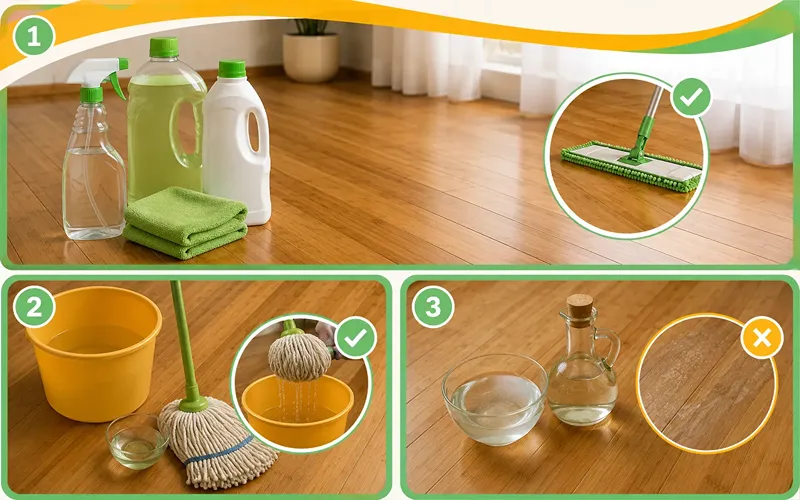
- pH-neutral. This is the main thing. Acids and alkalis both attack the protective coating.
- Made for hardwood or bamboo. These are formulated to clean without softening the finish.
- Residue-free. No wax, no polish, no oil in the formula. Residue is what makes floors look cloudy and feel sticky.
- Fast drying. Less time for moisture to sit on seams.
Commonly recommended options include Bona Hardwood Floor Cleaner, Simple Green Multi-Surface Floor Care, and whatever cleaner your flooring manufacturer names in the care guide. Their own recommendation is always the safest choice for warranty purposes.
A safe DIY option
If you have run out of cleaner, a few drops of pH-neutral dish soap in a bucket of warm water will do for one clean. Wring the mop out hard, and go over the floor afterwards with a pad dampened with plain water so no soap film is left.
This is a stopgap, not a routine. Soap builds up over time and dulls the finish.
Why not vinegar
Vinegar gets recommended constantly online for wood and bamboo floors. It is acidic, and over repeated use it eats away at the protective coating and can leave the surface looking dull and blotchy. It might look fine the first few times, which is exactly why the damage sneaks up on people. Leave it for the windows.
What To Avoid On Bamboo Floors
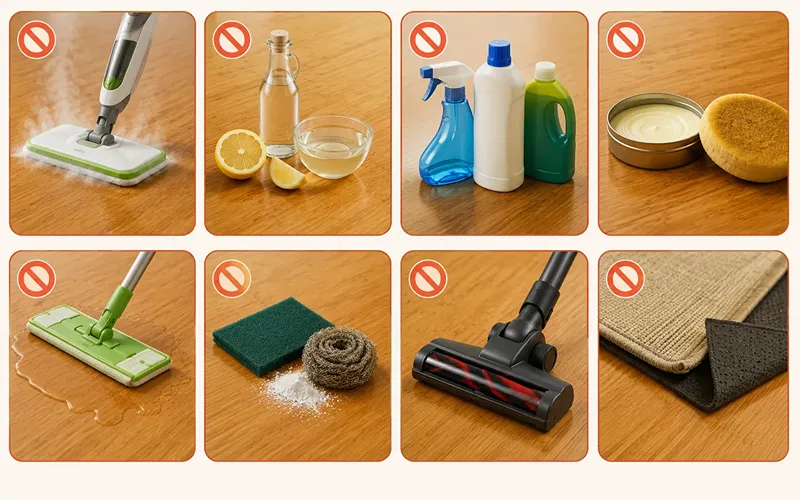
- Steam mops. Heat and moisture forced into the seams is the fastest way to warp bamboo. Almost every bamboo manufacturer voids the warranty over steam cleaning.
- Vinegar, lemon juice, and other acids. They strip the finish.
- Ammonia, bleach, and all-purpose sprays. Too harsh for a wood finish.
- Oil soaps and wax polishes. They leave a film that dulls the floor and interferes with any future recoat.
- Wet mopping and standing water. A soaking mop is the second most common cause of damage after grit.
- Abrasive pads, steel wool, and scouring powder. Instant permanent scratches.
- Vacuum beater bars. Turn them off.
- Rubber-backed or non-breathable mats. They trap moisture and can discolour the floor underneath. Use a mat with a natural or breathable backing.
Bamboo Floor Maintenance Tips That Make A Real Difference
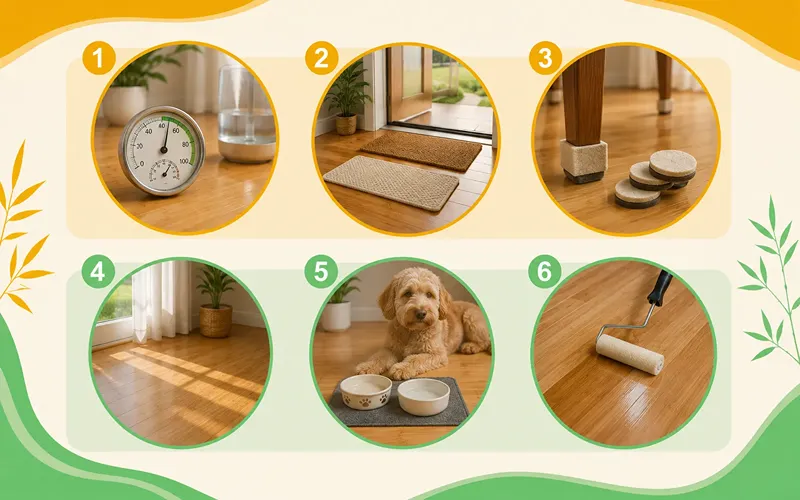
Cleaning keeps the floor looking good. Prevention keeps it looking good for twenty years.
Control the Humidity
Bamboo expands in humid air and shrinks in dry air. Aim to keep indoor humidity roughly between 35% and 60% year-round. A dehumidifier in a damp summer or a humidifier in a dry winter prevents gaps, cupping, and creaking. A cheap hygrometer is worth having.
Stop dirt at the Door
Put a coarse mat outside and a soft absorbent mat inside every external door. Most of the grit that scratches your floor arrives on shoes. A shoes-off rule inside is the single most effective thing you can do, especially with high heels, which concentrate huge pressure on a tiny point.
Protect against Furniture
Stick felt pads under every chair, table, and sofa leg, and check them a couple of times a year. They wear down and collect grit. Lift furniture instead of dragging it. Use wide caster wheels or a chair mat under desk chairs.
Manage Sunlight
Direct sun fades bamboo unevenly. Over a few years you get pale patches and a dark rectangle where the rug was. Use blinds or sheer curtains during the brightest hours, and rotate rugs and furniture occasionally so the colour changes evenly.
Keep pet nails Trimmed
Trimmed nails do far less damage than long ones. Placing a mat under food and water bowls also catches the splashes that cause dark rings.
Plan for a Recoat
On a factory-finished floor, a professional screen and recoat every few years restores the top layer without full sanding. It costs much less than refinishing and buys years of extra life. Note that engineered bamboo has a limited wear layer and may not be sandable at all, so check your product specifications before booking anyone.
Common Mistakes Homeowners Make
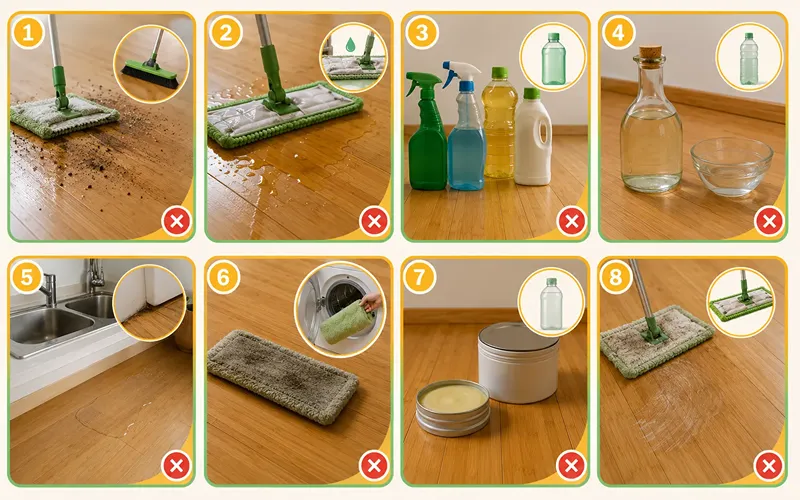
- Mopping without sweeping first. You are dragging grit across the finish with a wet pad.
- Using too much water. Bamboo tolerates damp, not wet. If you can see moisture sitting behind your mop, dial it back.
- Reaching for whatever cleaner is under the sink. Multi-purpose sprays are usually alkaline and will dull the coating.
- Trusting online vinegar advice. It is the most repeated bad tip in floor care.
- Ignoring small spills near sinks and dishwashers. Slow leaks cause more bamboo damage than dramatic spills, because nobody notices them for weeks.
- Using the same dirty mop pad every time. Wash pads after each use. A grey pad redistributes dirt.
- Waxing or polishing a polyurethane floor. It creates build-up and makes future maintenance harder.
- Scrubbing hard at a stain. Patient blotting beats aggressive scrubbing every time on a finished floor.
Quick Bamboo Floor Cleaning Schedule
| How often | What to do |
| As it happens | Blot spills and dry the spot |
| Daily to 3x weekly | Sweep or dust mop |
| Weekly | Vacuum (brush roll off) and damp mop with pH-neutral cleaner |
| Monthly | Wipe skirting boards, check felt pads, wash entry mats |
| Every 2-3 months | Deep clean, treat stains and scuffs, inspect for gaps |
| Seasonally | Check humidity, rotate rugs and furniture |
| Every few years | Professional screen and recoat, if suitable for your floor |
Final Thoughts
Cleaning bamboo flooring comes down to three habits: keep the grit off, keep the water light, and keep the chemicals gentle. Sweep often, mop weekly with a barely damp microfiber pad and a pH-neutral cleaner, and deal with spills as soon as they happen.
Skip the vinegar, skip the steam mop, and put felt pads under the furniture. Do that much and a bamboo floor will still look good long after you have forgotten which week you installed it.
Frequently Asked Questions
Can I use a steam mop on bamboo flooring?
No. Steam pushes hot moisture into the joints and can warp planks or lift the finish. It also voids most warranties.
Can I use vinegar to clean bamboo floors?
It is best avoided. Vinegar is acidic and gradually breaks down the protective coating, leaving the floor dull.
Can I use a Swiffer WetJet or similar spray mop?
Spray mops are fine in principle since they apply a light mist. Just make sure the solution is a hardwood-safe, pH-neutral formula rather than a general-purpose one.
How often should I mop bamboo floors?
Once a week for most rooms. Twice a week for kitchens and entryways. Bedrooms and spare rooms can go longer.
Why do my bamboo floors look streaky or cloudy after cleaning?
Usually too much cleaner, a dirty mop pad, or residue from a soap or wax product. Mop once with a barely damp pad and plain water to clear it, then use less cleaner going forward.
What is the best mop for bamboo floors?
A flat microfiber mop with a washable pad. It holds little water, glides without scratching, and is easy to keep clean.
Can bamboo flooring be refinished?
Solid bamboo usually can be sanded and refinished once or twice. Engineered bamboo has a thin wear layer and often cannot. Check your manufacturer’s specification first.
Is Murphy Oil Soap safe for bamboo?
It is not the best choice on modern polyurethane finishes. Oil soaps leave a residue that dulls the surface and complicates future recoating.