Concrete floors are tough, but they still collect dust, grit, spills, and stains. If you don’t clean them properly, they can look dull and patchy, and unsealed concrete can soak up stains for good. The good news is that learning how to clean concrete floors is easy once you know what type of concrete you have and which products are safe for it.
This guide covers the right tools, preparation, a step-by-step cleaning process, stain removal, drying, and simple maintenance. It works for living areas, basements, kitchens, and garages.
Know Your Concrete Floor Type First
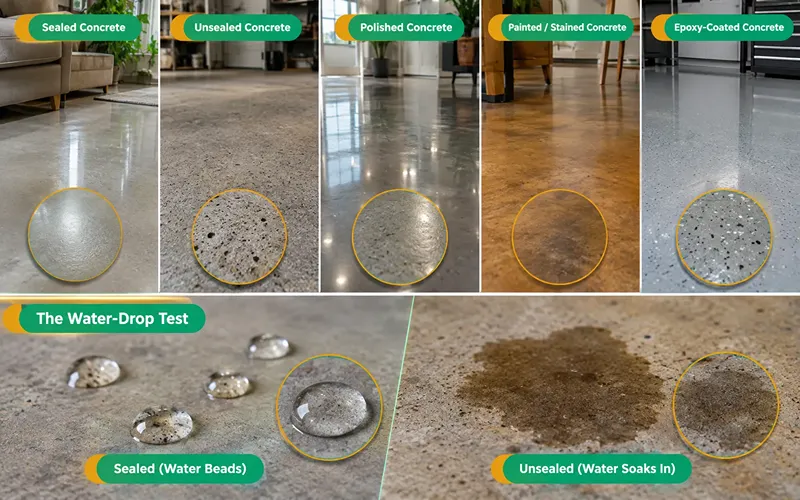
The biggest cleaning mistakes happen when people treat all concrete the same. Before you start, find out which type of flooring in Dubai you have.
Sealed concrete has a protective coating on top. It resists stains and needs only gentle cleaning.
Unsealed concrete is bare and porous. It absorbs water, oil, and dirt, so it needs more scrubbing and faster stain treatment.
Polished concrete has been ground and buffed to a natural shine. It usually has no coating, but it still needs gentle, pH-neutral cleaning to keep its gloss.
Painted, stained, or epoxy-coated concrete should be cleaned like sealed concrete. Always follow the coating maker’s instructions.
The Water-Drop Test
Pour a few drops of water on the floor in a low-traffic spot and wait five to ten minutes.
- Water beads on the surface: the floor is sealed.
- Water soaks in and the spot darkens: the floor is unsealed, or the sealer has worn off.
This simple test tells you how gentle you need to be and whether it’s time to reseal.
Tools and Supplies You’ll Need
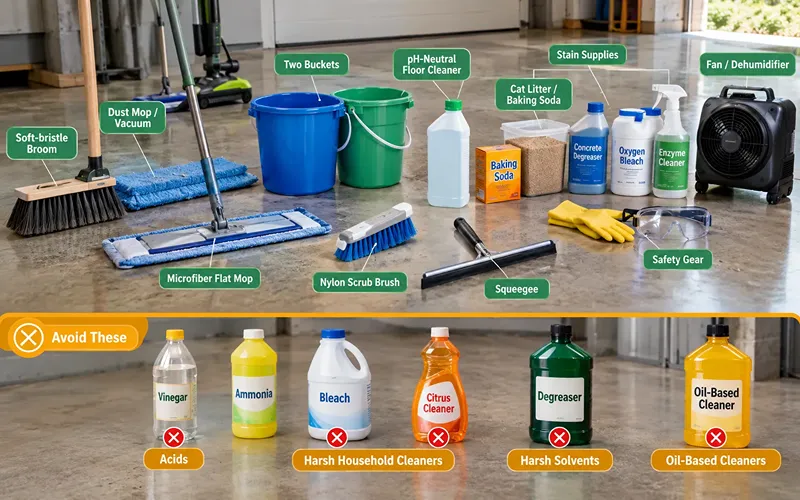
You don’t need special equipment for most indoor concrete floors. Gather these before you start:
- Soft-bristle broom, dust mop, or vacuum: clears dust and grit. A microfiber dust mop works well because it traps fine dust instead of pushing it around.
- Microfiber flat mop or cotton string mop: microfiber is best for sealed and polished floors because it uses less water.
- Two buckets: one for cleaning solution and one for clean rinse water.
- pH-neutral floor cleaner: safe for sealed, polished, and coated floors. A few drops of mild dish soap in warm water also works for light cleaning.
- Nylon scrub brush or long-handled deck brush: use soft bristles on sealed floors and stiffer bristles on unsealed concrete. Never use wire brushes.
- Squeegee or wet/dry vacuum: useful for unsealed floors, garages, and basements where you use more water.
- Stain supplies: cat litter or baking soda for oil, a concrete degreaser, oxygen bleach, and an enzyme cleaner for pet stains.
- Safety gear: rubber gloves, safety glasses, and good ventilation when using stronger cleaners.
- Fan or dehumidifier: helps unsealed floors and basements dry faster.
Cleaners to Avoid
Skip these on sealed, polished, or coated concrete because they can dull or break down the finish:
- Acids: vinegar, lemon juice, and other acidic cleaners.
- Harsh household cleaners: ammonia, chlorine bleach, and pine- or citrus-based cleaners.
- Harsh solvents: strong degreasers that can soften or strip sealer.
- Oil-based cleaners: these leave a film that attracts dirt.
Prepare the Floor Before Cleaning
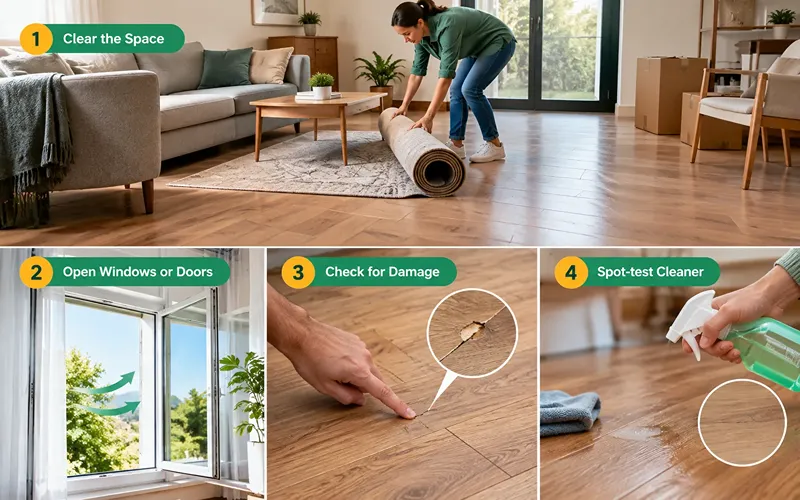
Good preparation makes the actual cleaning faster and more effective.
- Clear the space. Move furniture, rugs, and loose items so you can reach the whole floor.
- Open windows or doors. Airflow speeds up drying and is important if you use degreasers or bleach products.
- Check for damage. Note any cracks, chips, or worn patches. Clean these areas gently so you don’t make them worse.
- Spot-test any new cleaner. Try it in a hidden corner first and let it dry before using it on the whole floor.
How to Clean Concrete Floors Step by Step
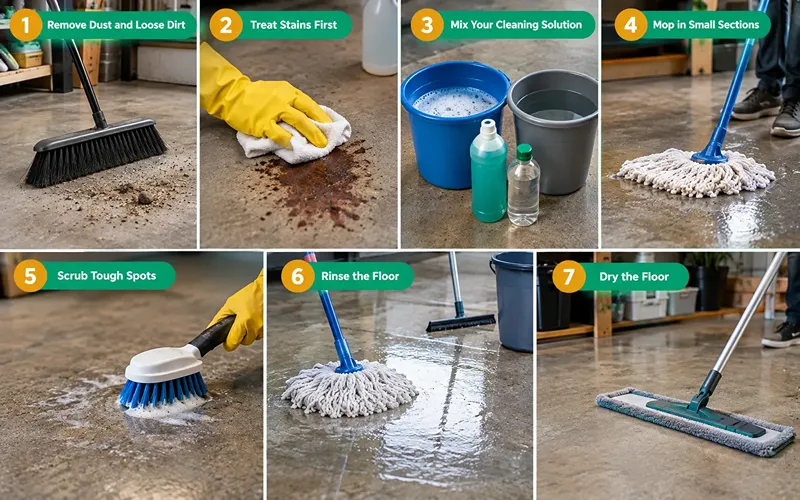
Follow these steps for a routine deep clean. Adjust the amount of water and scrubbing based on your floor type.
Step 1: Remove Dust and Loose Dirt
Sweep, dust mop, or vacuum the entire floor. Pay attention to corners, edges, and under furniture. Grit acts like sandpaper under shoes, so this step protects the surface as well as cleaning it.
Step 2: Treat Stains First
Deal with oil marks, spills, and other stains before you mop (see the stain section below). If you mop first, you may spread the stain or push it deeper into unsealed concrete.
Step 3: Mix Your Cleaning Solution
Fill one bucket with warm water and add a pH-neutral cleaner according to the label. For light cleaning, a small squirt of mild dish soap per gallon of warm water is enough. Too much soap leaves a sticky film that attracts dirt. Fill the second bucket with clean water.
Step 4: Mop in Small Sections
Start at the far corner of the room and work toward the exit so you don’t walk on wet floor. Clean one small section at a time.
- Sealed and polished floors: wring the mop well so it’s only damp. Excess water can leave streaks and cloudy spots.
- Unsealed floors: you can use a wetter mop or a deck brush, since the surface needs more scrubbing to lift dirt from its pores.
Step 5: Scrub Tough Spots
Use a nylon brush on high-traffic areas, scuff marks, and textured spots. Scrub in small circles, then mop again to pick up the loosened dirt.
Step 6: Rinse the Floor
Dip a clean mop in the rinse bucket and go over the floor to remove any cleaner residue. Change the rinse water when it gets cloudy. Rinsing is the step most people skip, and it’s the main cause of dull, sticky concrete. On unsealed garage or basement floors, push the rinse water to a drain with a squeegee or pick it up with a wet/dry vacuum.
Step 7: Dry the Floor
Let the floor air-dry or wipe it with a dry microfiber mop. The next section explains how to dry each floor type properly.
How to Remove Common Stains from Concrete Floors
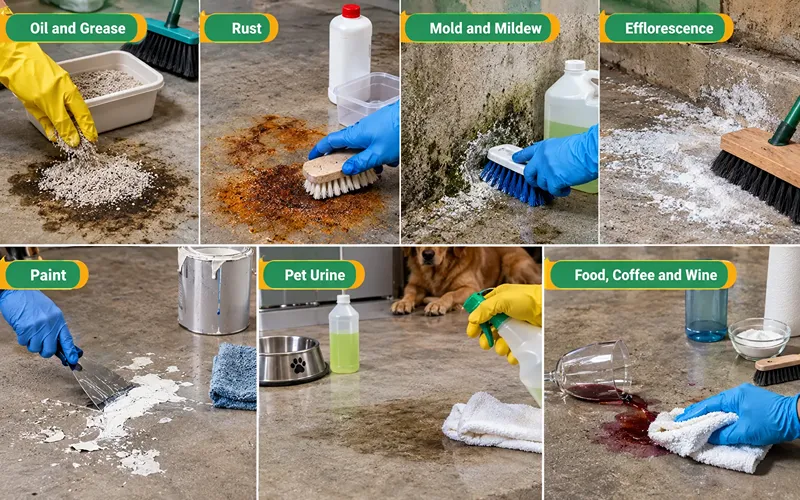
Stains are easiest to remove when they’re fresh. Always test a product on a hidden spot first. Use stronger treatments only on unsealed concrete unless the product label says it’s safe for sealers.
Oil and Grease
- Fresh stains: cover the spot with cat litter, baking soda, or cornstarch. Leave it for several hours or overnight so it absorbs the oil, then sweep it up.
- Remaining marks: scrub with a concrete degreaser or hot water and dish soap, then rinse.
- Old stains on unsealed concrete: make a poultice (a thick absorbent paste) from baking soda and a degreaser. Spread it over the stain, cover it with plastic wrap, and leave it for 24 hours. Scrape it off and rinse.
Rust
- Unsealed concrete: use a rust remover made for concrete. Apply it, wait the time on the label, scrub, and rinse well.
- Sealed or polished concrete: call a professional or ask the sealer maker what’s safe, because most rust removers are acidic and can damage the finish.
Mold and Mildew
These are common in basements and damp garages.
- Scrub the area with an oxygen bleach solution mixed according to the label.
- Rinse the spot and dry it completely.
- Fix the moisture source, such as a leak, poor airflow, or high humidity. If you don’t, the mold will return.
Never mix bleach products with ammonia or acidic cleaners, because the fumes are dangerous.
Efflorescence (White, Powdery Deposits)
Efflorescence is salt pushed to the surface by moisture moving through the concrete.
- First try: brush it off with a dry, stiff nylon brush. Don’t wet it first, because water can dissolve the salts and push them back in.
- Stubborn deposits: use an efflorescence remover made for concrete.
- If it keeps coming back: it’s a moisture problem, not a cleaning problem.
Paint
- Fresh latex paint: scrub with warm soapy water right away.
- Dried paint: scrape gently with a plastic scraper. For stubborn spots on unsealed concrete, use a paint stripper labeled safe for concrete.
- Sealed floors: be careful with strippers, because they can remove the sealer too.
Pet Urine
Concrete absorbs urine and holds the smell. Blot up as much as you can, then soak the area with an enzyme cleaner. Let it sit for the time the label recommends so the enzymes can break down the odor, then rinse and dry.
Food, Coffee, and Wine
Wipe spills immediately. Clean the spot with warm water and dish soap. On unsealed concrete, a paste of oxygen bleach and water left for 15 to 30 minutes can lift the remaining color.
Drying Concrete Floors the Right Way
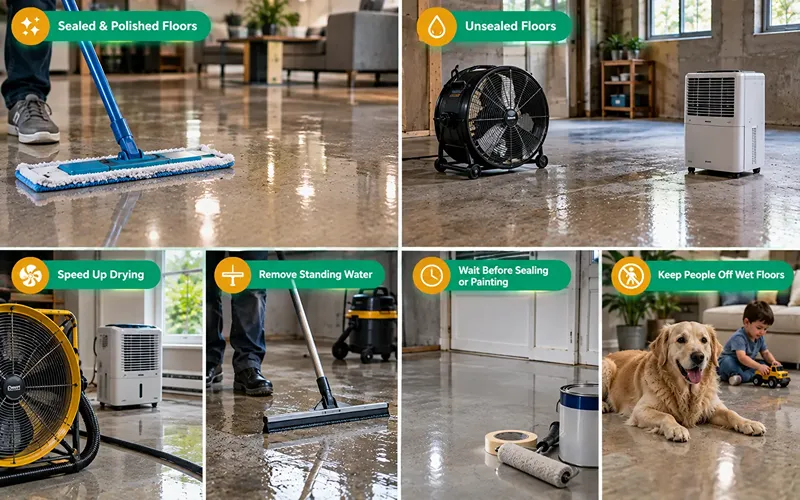
Drying matters more than most people think. Water left on concrete can cause streaks, slippery surfaces, mildew, and white mineral marks.
Sealed and Polished Floors
These dry quickly because water stays on the surface. Buff the floor with a dry microfiber mop or cloth after rinsing. This prevents water spots and brings back the shine.
Unsealed Floors
Bare concrete absorbs water, so it takes longer to dry.
- Speed up drying: run fans, open windows, and use a dehumidifier in basements.
- Remove standing water: pick up puddles with a squeegee or wet/dry vacuum instead of letting them soak in.
- Before sealing or painting: wait until the concrete is completely dry. After a deep clean with lots of water, this can take 24 to 48 hours.
Keep People Off Wet Floors
Damp concrete can be very slippery. Keep kids and pets out of the area until it’s fully dry.
Maintenance Tips to Keep Concrete Floors Clean
Regular care means fewer deep cleans and a longer-lasting floor.
| How often | What to do |
| Daily or every few days | Dust mop or vacuum high-traffic areas |
| As they happen | Wipe up spills right away, especially oil, wine, and pet accidents |
| Weekly | Damp mop with a pH-neutral cleaner |
| Every season | Deep clean and scrub garages, basements, and heavy-use areas |
| Once a year | Do the water-drop test to check the sealer |
| Every 2-5 years | Reseal sealed concrete, or sooner in high-traffic areas |
More Ways to Protect Your Floor
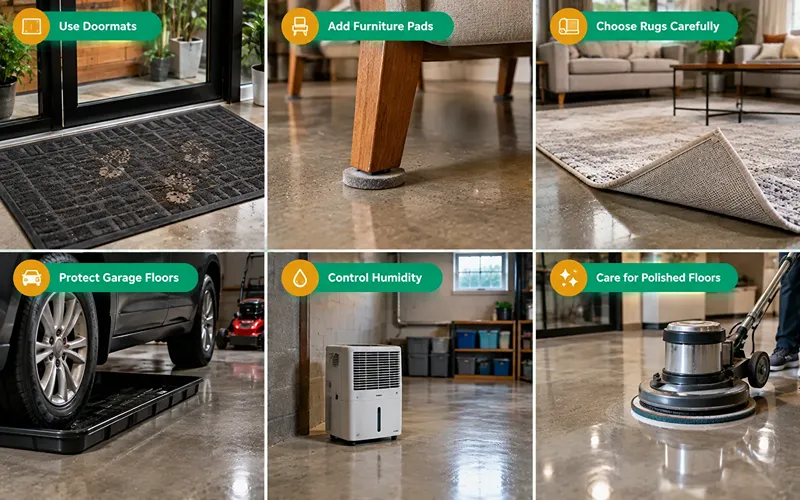
- Use doormats: place mats at every entrance to catch grit before it reaches the floor.
- Add furniture pads: put felt pads under furniture legs to prevent scratches on sealed and polished concrete.
- Choose rugs carefully: use rugs with breathable backings. Rubber backings can trap moisture and discolor concrete.
- Protect garage floors: use drip trays under vehicles and mowers to stop oil stains before they start.
- Control humidity: in basements, lower humidity helps prevent mildew and efflorescence.
- Care for polished floors: have them professionally burnished every so often to restore their gloss.
Common Mistakes to Avoid
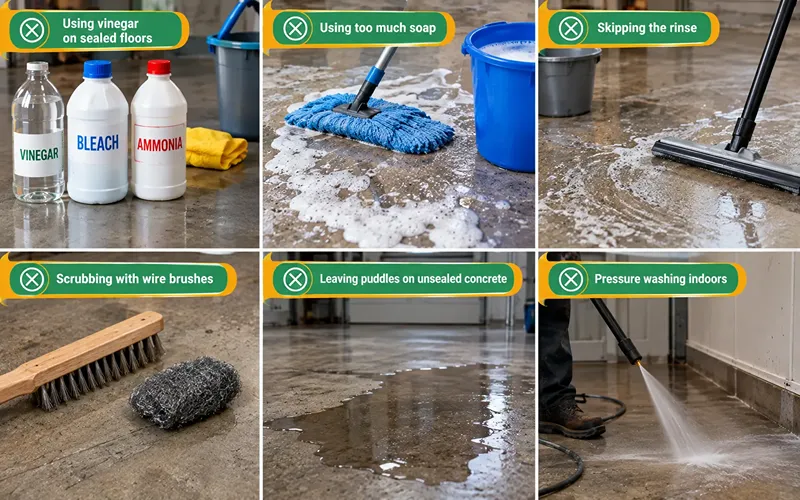
- Using vinegar on sealed floors: vinegar, bleach, or ammonia can dull or strip the finish.
- Using too much soap: extra soap leaves a sticky residue that attracts more dirt.
- Skipping the rinse: the floor dries cloudy and gets dirty faster.
- Scrubbing with wire brushes: steel wool or wire bristles can scratch concrete.
- Leaving puddles on unsealed concrete: standing water soaks in and can cause stains and mildew.
- Pressure washing indoors: it forces water into walls, baseboards, and joints.
Final Thoughts
Knowing how to clean concrete floors comes down to four things: identify your floor type, use a gentle pH-neutral cleaner, treat stains early, and dry the floor properly. Add a simple routine of sweeping, weekly mopping, and resealing when needed, and your concrete floors will stay clean and attractive for years.
Frequently Asked Questions
What is the best cleaner for concrete floors?
A pH-neutral floor cleaner is the safest choice for most concrete floors. It removes dirt without damaging sealers, coatings, or polished finishes. For light cleaning, warm water with a small amount of mild dish soap works well.
Can I use vinegar to clean concrete floors?
Avoid vinegar on sealed, polished, stained, or coated concrete, because its acid can etch or dull the surface. On plain unsealed concrete, diluted vinegar can help with some spot cleaning, but test it in a hidden area first.
How often should I clean concrete floors?
Sweep or dust mop high-traffic areas every few days and damp mop once a week. Deep clean garages and basements every season.
How do I make concrete floors shine again?
Clean the floor, rinse it well, and buff it dry with microfiber. Most dullness comes from soap residue, so a good rinse often restores the shine. If the floor is still dull, the sealer may be worn and need a fresh coat. For polished concrete, a professional can re-burnish it.
Can I mop unsealed concrete?
Yes. Unsealed concrete can handle a wetter mop and firmer scrubbing. Because it absorbs water, remove extra water quickly and dry the floor well with fans or ventilation.