Dirty grout can make a clean tile floor look old and neglected. The good news is that most discolored grout is not ruined. It is simply holding onto dirt, grease, or mildew that the right method can lift out. If you have been wondering how to clean grout between floor tiles without damaging them, this guide walks you through eight proven methods, from simple warm-water scrubbing to steam cleaning, and explains which one suits your grout and your stain. Whether you have residential or commercial flooring in Dubai, these tips will help keep your tiled floors looking fresh and well-maintained.
Why Grout Gets Dirty in the First Place

Most floor grout is cement-based, which makes it porous. Under a magnifying glass it looks more like a sponge than a solid surface, so it soaks up anything that sits on it. Tiles are smooth and wipe clean, but the grout lines are slightly recessed and textured, so dirt settles there first.
The most common causes of grout stains and discoloration are:
- Tracked-in soil and grit that gets ground into the grout lines by foot traffic.
- Dirty mop water. Mopping with the same bucket of water spreads grime across the floor, and it drains straight into the low grout lines.
- Grease and food spills in kitchens, which bind dirt to the grout surface.
- Soap scum and body oils on bathroom floors.
- Mold and mildew in damp areas like bathrooms, laundry rooms, and entryways, usually showing up as black, gray, or pink spots.
- Hard water minerals, which leave a chalky white or cloudy film.
- Worn-out sealer. Once the protective sealer wears away, grout absorbs stains much faster.
Why Regular Grout Cleaning Matters

Cleaning grout is about more than looks. Grime and moisture trapped in porous grout create a good home for bacteria and mold. Stains that sit for months can also set permanently, which leaves you choosing between living with them or regrouting. A light cleaning every few weeks and a deeper clean a few times a year keeps grout looking close to its original color and helps it last longer.
Cement Grout vs. Epoxy Grout: How Cleaning Differs
Before you pick a cleaning method, find out what kind of grout you have. The two main types behave very differently.
Cement grout (sanded or unsanded) is the most common type in homes. It is porous, absorbs stains, and needs to be sealed every one to three years. It is sensitive to strong acids, including undiluted vinegar, which can slowly eat away at the surface with repeated use.
Epoxy grout is made from resin and a hardener. It is non-porous, so stains usually sit on the surface instead of soaking in. It does not need sealing and stands up to most cleaners. Its main weakness is that coarse abrasives and harsh solvents can dull or haze its smooth finish.
| Cement grout | Epoxy grout | |
| Absorbs stains | Yes, porous | Very little, non-porous |
| Needs sealing | Yes, every 1 to 3 years | No |
| Best everyday cleaner | pH-neutral cleaner or warm water | Mild dish soap or pH-neutral cleaner |
| Deep-clean options | Baking soda, oxygen bleach, steam | Baking soda, diluted dish soap, steam |
| Avoid | Strong acids, frequent vinegar, wire brushes | Abrasive pads, harsh solvents, wire brushes |
How to Tell Which Grout You Have
- Water drop test: Put a few drops of water on a grout line. If it darkens and soaks in within a minute, it is unsealed cement grout. If it beads up, it is either sealed cement grout or epoxy.
- Look and feel: Epoxy grout feels smooth, slightly glossy, and almost plastic-like. Cement grout looks matte and feels gritty, especially sanded grout.
- Check records: Installation invoices or leftover grout bags in the garage often name the product.
Before You Start: Supplies and Safety

You do not need expensive equipment for most grout cleaning jobs. Gather these basics first:
- A stiff nylon grout brush (narrow, angled bristles fit the joints best)
- An old toothbrush for corners and edges
- A spray bottle and a bucket
- Microfiber cloths or a clean sponge mop
- Rubber gloves and safety glasses
- Knee pads or a folded towel to kneel on
- A vacuum or broom
Keep these precautions in mind for every method:
- Vacuum or sweep first. Scrubbing loose grit into wet grout turns it into mud.
- Test in a hidden spot. Try any cleaner on a small area, such as behind a door or under an appliance, before doing the whole floor.
- Protect natural stone. Marble, travertine, limestone, and slate are damaged by acids. Never use vinegar, lemon juice, or acidic grout cleaners on or near them.
- Never mix chemicals. Chlorine bleach mixed with ammonia or with acids (including vinegar) releases toxic gases.
- Ventilate the room. Open windows or run a fan, especially with bleach or commercial cleaners.
How to Clean Grout Between Floor Tiles: 8 Proven Methods
Start with the gentlest method that could work and move up only if you need to. This protects your grout and sealer and saves you effort.
Method 1: Warm Water and a Stiff Brush

Best for: light surface dirt, routine cleaning, and all grout types, including epoxy.
You need: hot water, a grout brush, a bucket, and a cloth.
- Sweep or vacuum the floor.
- Pour or spray hot water over a small section of grout lines.
- Scrub each line with the brush using short back-and-forth strokes.
- Wipe away the dirty water with a damp microfiber cloth before it dries.
It sounds too simple, but plain hot water and good scrubbing remove more grime than many people expect. It is also the safest option for any floor.
Method 2: Baking Soda Paste

Best for: moderate grime, dull or grayish grout, and kitchen floors. Safe on both cement and epoxy grout.
You need: baking soda, water, a grout brush or toothbrush, and a damp cloth.
- Mix about three parts baking soda with one part water to make a thick paste.
- Spread the paste along the grout lines with your finger (gloved) or the brush.
- Let it sit for 5 to 10 minutes.
- Scrub firmly, then rinse with clean water and wipe dry.
Baking soda is a mild abrasive and slightly alkaline, which helps it cut through light grease and lift embedded dirt without harming grout.
Method 3: Diluted White Vinegar Spray

Best for: hard water film and soap scum on ceramic or porcelain floors with sealed cement grout or epoxy grout.
You need: white vinegar, warm water, a spray bottle, and a brush.
- Mix equal parts white vinegar and warm water in a spray bottle.
- Spray the grout lines and let the solution sit for no more than 5 minutes.
- Scrub with the brush.
- Rinse thoroughly with plain water so no acid stays in the grout.
Caution: Use vinegar occasionally, not as your regular cleaner. Repeated acid exposure can weaken unsealed cement grout over time, and it should never be used on natural stone tiles.
Method 4: Hydrogen Peroxide and Baking Soda

Best for: brightening white or light-colored grout, light mildew stains, and general discoloration.
You need: 3% hydrogen peroxide (the standard drugstore strength), baking soda, a few drops of dish soap (optional), and a brush.
- Mix about 1/2 cup baking soda with 1/4 cup hydrogen peroxide into a spreadable paste. Add a few drops of dish soap to help it cling and cut grease.
- Apply the paste to the grout lines.
- Let it sit for 10 minutes.
- Scrub, rinse with clean water, and wipe dry.
Mix this paste fresh each time, because peroxide loses strength once exposed to air and light. Test it first on colored grout, since peroxide can lighten some pigments.
Method 5: Oxygen Bleach Solution

Best for: deep, set-in discoloration across a whole floor, dingy cement grout, and many colored grouts (test first).
You need: powdered oxygen bleach (sodium percarbonate, sold as OxiClean and similar products), hot water, a bucket, and a brush.
- Dissolve the powder in hot water following the label directions.
- Pour or sponge the solution onto the grout lines, keeping the grout wet.
- Let it work for 10 to 15 minutes. Do not let it dry out.
- Scrub each line, then rinse well with clean water and dry the floor.
Oxygen bleach releases oxygen as it breaks down, which lifts organic stains without the harsh fumes of chlorine bleach. Many cleaning professionals consider it the most effective DIY option for large floor areas.
Method 6: Diluted Chlorine Bleach
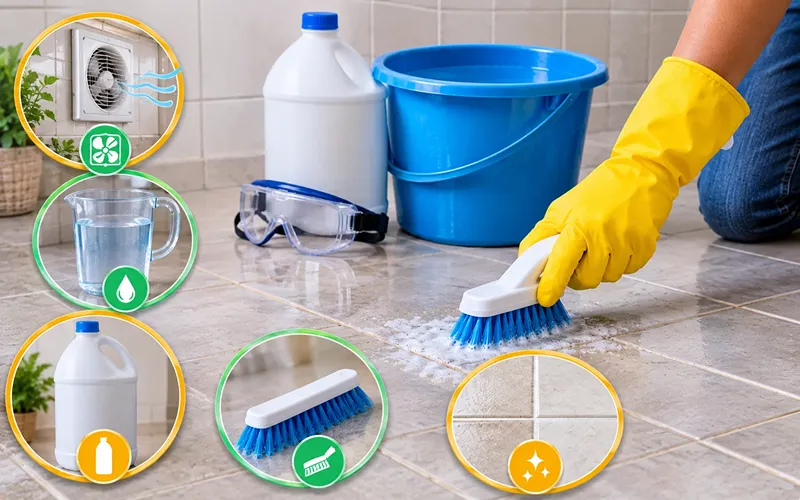
Best for: stubborn mold and mildew on white grout only.
You need: regular household bleach, water, gloves, eye protection, and a brush.
- Ventilate the room well.
- Mix 1 cup of bleach into 1 gallon of water.
- Apply to the stained grout with a brush or sponge and let it sit for about 10 minutes.
- Scrub, then rinse thoroughly with clean water.
Caution: Chlorine bleach can fade colored grout, and frequent use may weaken cement grout. Use it as a spot treatment for mold, not as a routine cleaner, and never combine it with vinegar, ammonia, or other cleaners.
Method 7: Steam Cleaning
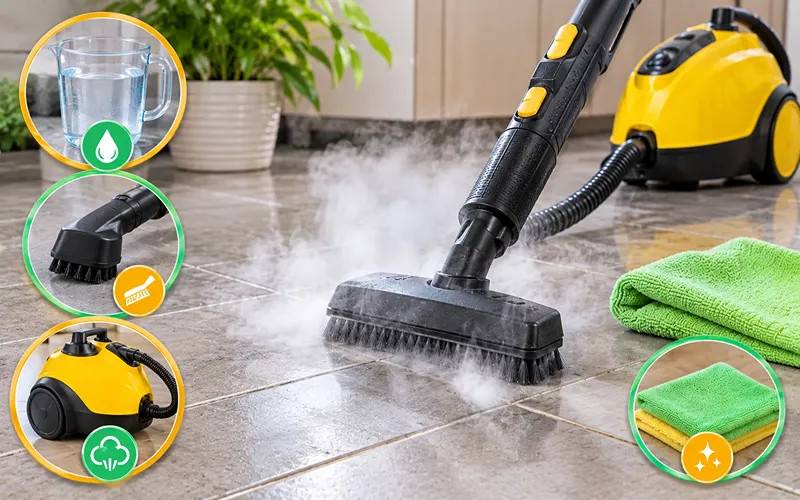
Best for: heavy buildup, greasy kitchen floors, sanitizing without chemicals, and large areas.
You need: a steam cleaner or steam mop with a narrow jet nozzle or small brush attachment, plus microfiber cloths.
- Vacuum the floor and fill the steamer with water (distilled water helps prevent mineral buildup in the machine).
- Fit the narrow nozzle or grout brush attachment.
- Work slowly along each grout line, letting the steam loosen the dirt.
- Wipe up the loosened grime right away with a microfiber cloth.
High-temperature steam kills most bacteria and mold on contact and lifts grime that scrubbing alone cannot reach. Repeated steaming can wear down grout sealer, so plan to reseal cement grout after a deep steam clean. Avoid steaming cracked or crumbling grout, and check that your floor type is steam-safe.
Method 8: Commercial Grout Cleaner

Best for: neglected floors, heavy grease, and stains that DIY methods have not shifted.
You need: a grout cleaner suited to your grout and stain (see the next section), a brush, and protective gloves.
- Read the label to confirm the product is safe for your grout and tile type.
- Apply as directed, usually by spraying or brushing it onto the grout lines.
- Leave it for the recommended dwell time, usually 5 to 10 minutes.
- Scrub, rinse with plenty of clean water, and dry the floor.
For very large or badly stained floors, a drill-mounted scrub brush can save your wrists and knees. Use a soft or medium bristle attachment to avoid wearing down the grout.
Common Grout Cleaning Mistakes to Avoid

- Using a wire brush. Metal bristles scratch tiles and gouge grout, creating rough spots that trap even more dirt. Stick to stiff nylon.
- Letting cleaners dry on the grout. Dried residue attracts dirt and can leave a film. Always rinse with clean water.
- Skipping the rinse after vinegar or acids. Leftover acid keeps working on cement grout long after you finish.
- Using too much water. Flooding the floor pushes dirty water deeper into porous grout. Work in small sections and wipe up as you go.
- Mixing products. Bleach combined with vinegar, ammonia, or many commercial cleaners can release dangerous gases.
- Ignoring the tile type. A cleaner that is fine for porcelain can etch marble or travertine permanently.
- Scrubbing crumbling grout. If grout is cracked, sandy, or missing, cleaning will not fix it. It needs repair or regrouting.
How to Keep Grout from Getting Dirty Again

Once your grout is clean, a few habits will keep it that way and make future cleaning much easier.
- Seal cement grout. After a deep clean, let the grout dry for at least 24 to 72 hours (check the sealer label), then apply a penetrating grout sealer. Reseal every one to three years, or when water no longer beads on the surface. Epoxy grout does not need sealing.
- Sweep or vacuum often. Removing grit two or three times a week stops it from being ground into the grout.
- Mop with clean water. Change mop water as soon as it looks cloudy, or use a two-bucket system with one bucket for rinsing.
- Use a pH-neutral floor cleaner for routine mopping. Harsh cleaners strip sealer faster.
- Wipe spills right away, especially coffee, wine, sauces, and oils.
- Put down doormats at entrances to catch dirt before it reaches tile.
- Control moisture in bathrooms and laundry rooms by running the exhaust fan and drying floors after showers to discourage mold.
- Do a quick grout scrub monthly. Five minutes with a brush and warm water prevents the buildup that requires a full deep clean.
If stains keep coming back no matter what you do, consider a grout colorant or, during the next renovation, switching to epoxy grout, which resists stains far better than cement grout.
Final Thoughts
Learning how to clean grout between floor tiles comes down to two choices: identifying your grout type and matching the method to the stain. Begin with warm water or baking soda, move to peroxide or oxygen bleach for deeper discoloration, and save bleach, steam, and acidic cleaners for specific problems. Once the grout is clean, seal it, mop with clean water, and give it a quick scrub each month. With those habits, your floors will stay fresh and bright with far less effort.
Frequently Asked Questions
What is the best way to clean grout between floor tiles?
For most homes, a baking soda paste or an oxygen bleach solution scrubbed in with a stiff nylon brush gives the best results with the least risk. For heavy buildup, a steam cleaner or an alkaline commercial grout cleaner works faster.
Can I use vinegar to clean grout?
You can use diluted vinegar occasionally on sealed cement grout or epoxy grout with ceramic or porcelain tiles. Rinse it off well. Avoid it entirely on natural stone, and do not use it as your everyday cleaner, because repeated acid exposure can weaken cement grout.
How do I get black mold out of grout?
For white grout, apply a diluted bleach solution (1 cup bleach per gallon of water), wait about 10 minutes, scrub, and rinse. For colored grout, use hydrogen peroxide or oxygen bleach instead. If mold returns quickly or has spread under the grout, the grout may need replacing.
How do I make dirty grout white again?
Start with a hydrogen peroxide and baking soda paste, or an oxygen bleach soak. If deep stains remain after cleaning, a grout colorant (sometimes called grout paint or grout pen) can restore an even white color.
How often should I clean floor grout?
Give grout a quick scrub about once a month in busy areas and a deep clean every three to six months. Kitchens, bathrooms, and entryways usually need more attention than bedrooms.
Does steam cleaning damage grout?
Steam is safe for grout in good condition, but it can wear down sealer over time and may worsen cracked or loose grout. Reseal cement grout after deep steam cleaning.
Is epoxy grout easier to clean than cement grout?
Yes. Because epoxy grout is non-porous, stains sit on the surface and usually wipe away with mild soap and water. Cement grout absorbs stains and needs sealing to stay clean.