Terracotta tiles bring warmth and character to any room. Their earthy orange and red tones work in rustic kitchens, sunny patios, and modern living spaces alike. But terracotta is also one of the most porous flooring materials you can buy, which means it soaks up spills, dirt, and even the wrong cleaning products.
The good news is that keeping terracotta looking great is not difficult. You just need the right products, a simple routine, and a little knowledge about what your tiles can and cannot handle.
In this guide, you will learn how to clean terracotta tiles safely, from everyday mopping to deep cleaning and stain removal. We will also cover the mistakes that damage this type of flooring in Dubai and the habits that keep it beautiful for decades.
Before You Start: Know What Kind of Terracotta You Have
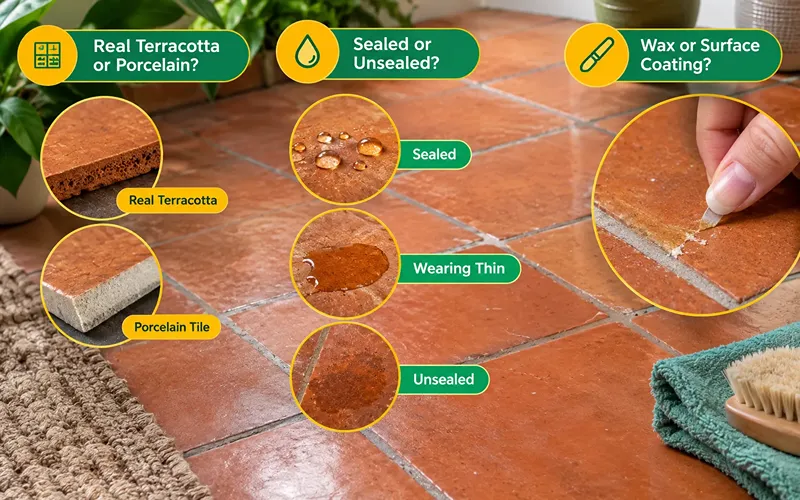
The right cleaning method depends on the condition of your floor. A product that is perfectly safe on one terracotta floor can leave marks on another. Spend five minutes checking these three things first.
Is It Real Terracotta or Terracotta-Effect Porcelain?
Many modern “terracotta” floors are actually porcelain tiles printed to look like clay. Porcelain is dense and barely absorbs water, so it can be cleaned like any ordinary tile. Check the edge of a spare or cut tile. Real terracotta is the same orange-red colour all the way through. Porcelain usually shows a different body colour under the printed surface.
Is It Sealed or Unsealed?
This is the most important question. Drip a few drops of water onto a clean tile in a busy spot, such as a doorway, and watch for one minute.
- Water beads on top: the sealer is working. Gentle routine cleaning is all you need.
- Water slowly spreads and darkens the tile: the sealer is wearing thin. Clean gently and plan to reseal soon.
- Water soaks in almost instantly: the tile is unsealed. Avoid wet cleaning and any strong product until the floor is protected.
Repeat the test in a quiet corner. If the corner beads and the doorway does not, the sealer has worn away in high-traffic areas only.
Does It Have Wax or a Surface Coating?
Older floors are often finished with wax or a glossy topical sealer. Gently scrape a hidden spot, such as under a sofa, with your fingernail. If a thin yellowish layer comes off, you have a coating. Dull, yellow, or patchy floors with a coating usually need stripping, not stronger scrubbing.
Tools and Supplies You Will Need
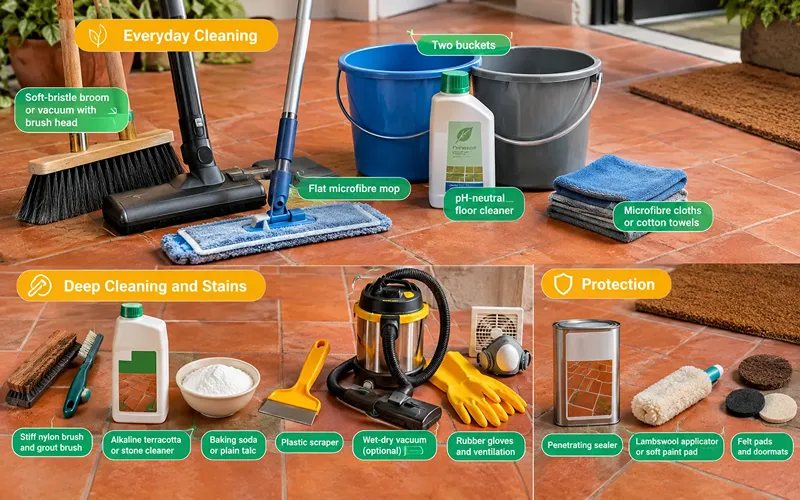
You do not need expensive equipment. Most of what you need is probably already in your cupboard.
For Everyday Cleaning
- Soft-bristle broom or vacuum with a brush head. Avoid hard plastic beater bars, which can scratch soft clay.
- Flat microfibre mop. It traps dirt instead of pushing it into grout lines.
- Two buckets. One for cleaning solution and one for clean rinse water.
- pH-neutral floor cleaner. Look for one labelled safe for natural stone, unglazed tiles, or terracotta.
- Microfibre cloths or old cotton towels for drying.
For Deep Cleaning and Stains
- Stiff nylon scrubbing brush and a narrow grout brush.
- Alkaline terracotta or stone cleaner for heavy grease and built-up grime.
- Baking soda or plain talc for making stain-lifting pastes.
- Plastic scraper for wax drips, paint, or chewing gum.
- Wet-dry vacuum (optional, but very helpful for lifting dirty water off large floors).
- Rubber gloves and good ventilation when using stronger products.
For Protection
- Penetrating (impregnating) sealer made for terracotta.
- Lambswool applicator or soft paint pad to apply it evenly.
- Felt pads for furniture legs and doormats for every entrance.
One tip that saves money: choose your cleaner and sealer from the same brand where possible. Products from one system are designed to work together, while mixing brands can leave sticky residues or cloudy patches.
The Best Cleaning Methods for Terracotta Tiles
There is no single best way to clean terracotta. The best method is the gentlest one that gets the job done. Use this table to match the method to your floor.
| Floor condition | Best method | How often |
| Sealed, lightly soiled | Dry sweep, then damp mop with pH-neutral cleaner | Weekly |
| Sealed, greasy (kitchens) | Diluted alkaline cleaner, scrub, rinse twice | Every 2-3 months |
| Unsealed or worn seal | Dry clean only, spot-clean spills, then seal | Seal as soon as possible |
| Dull, yellow, waxy | Strip old wax, rinse, dry fully, reseal | Once, then routine care |
| Outdoor patio | Sweep, hose and stiff brush, outdoor stone cleaner | Seasonally |
| New installation | Remove grout haze with the product your installer recommends, then seal | Once |
Should You Use Vinegar?
You will find many guides recommending white vinegar, and just as many warning against it. Here is the simple answer. Vinegar is an acid. Acid can dull bare clay and eat into cement-based grout over time.
If your floor is well sealed, a weak mix (about one part vinegar to five parts water), used occasionally and rinsed straight away, is unlikely to cause harm. On unsealed, handmade, or reclaimed tiles, skip it entirely. A pH-neutral cleaner does the everyday job better anyway, because most floor dirt is greasy, and vinegar is poor at removing grease.
What About Steam Mops?
Avoid them. The heat and moisture can soften sealers, cause cloudy patches, and push water deep into the clay.
How to Clean Terracotta Tiles: Step-by-Step
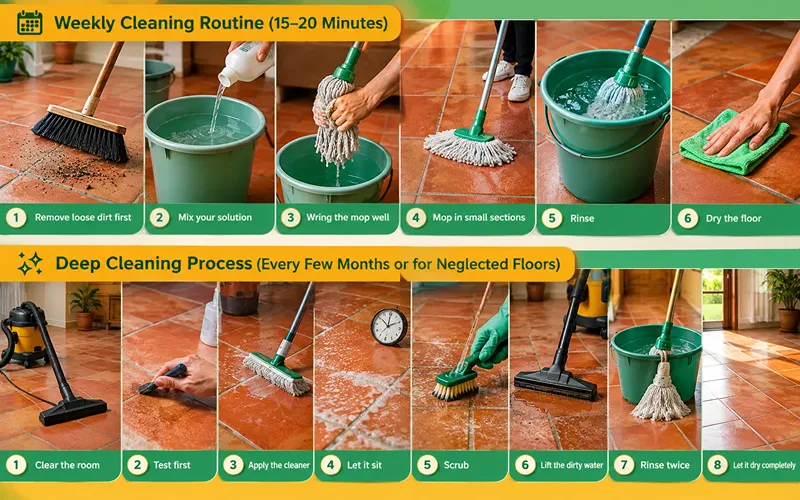
This section covers two routines. The weekly clean keeps a sealed floor looking fresh. The deep clean is for floors that look tired, greasy, or neglected.
Weekly Cleaning Routine (15–20 Minutes)
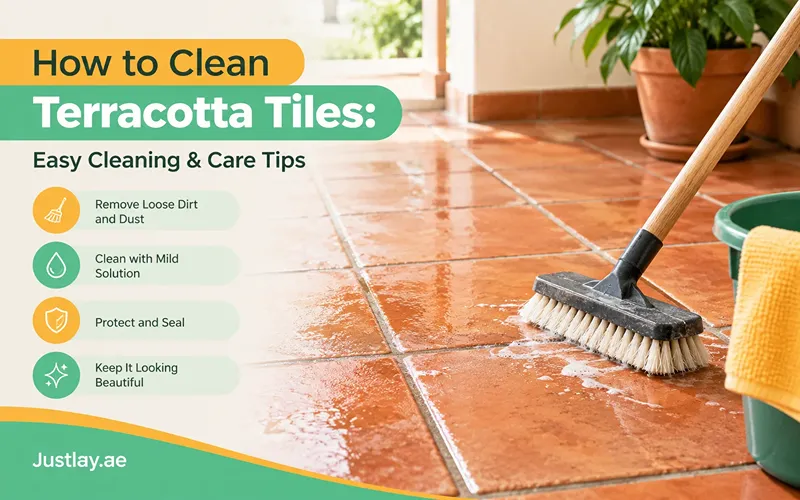
- Remove loose dirt first. Sweep or vacuum the whole floor. Grit acts like sandpaper under shoes, and a wet mop turns it into muddy paste.
- Mix your solution. Add a pH-neutral cleaner to a bucket of lukewarm water. Follow the label dose. More product does not mean cleaner tiles; it means sticky residue.
- Wring the mop well. It should feel damp, not wet. Terracotta needs very little water.
- Mop in small sections. Work across about one square metre at a time, moving toward the door so you do not walk on clean tiles.
- Rinse. Go over each section with a mop dipped in clean water from the second bucket. Change the rinse water when it turns grey.
- Dry the floor. Buff with a dry microfibre cloth or towel. This prevents water marks and stops dirt settling back into the surface.
Deep Cleaning Process (Every Few Months or for Neglected Floors)
- Clear the room and vacuum thoroughly, including the edges and corners.
- Test first. Try your alkaline cleaner on a hidden tile and let it dry. Wet terracotta always looks better than it really is.
- Apply the cleaner at the dilution on the label. Work in a small area so the product does not dry before you scrub.
- Let it sit for 5 to 10 minutes. This gives it time to loosen grease and embedded grime.
- Scrub with a stiff nylon brush. Pay extra attention to grout lines and traffic paths.
- Lift the dirty water with a wet-dry vacuum or a well-wrung mop. Do not just spread it around.
- Rinse twice with clean water. If the floor still feels slippery, there is cleaner left behind, so rinse again.
- Let it dry completely. Open windows and allow at least 24 hours before resealing.
A strong deep clean often removes some of the old sealer. That is normal. Do the water drop test again once the floor is dry, and reseal if the water soaks in.
How to Remove Stubborn Stains From Terracotta Tiles
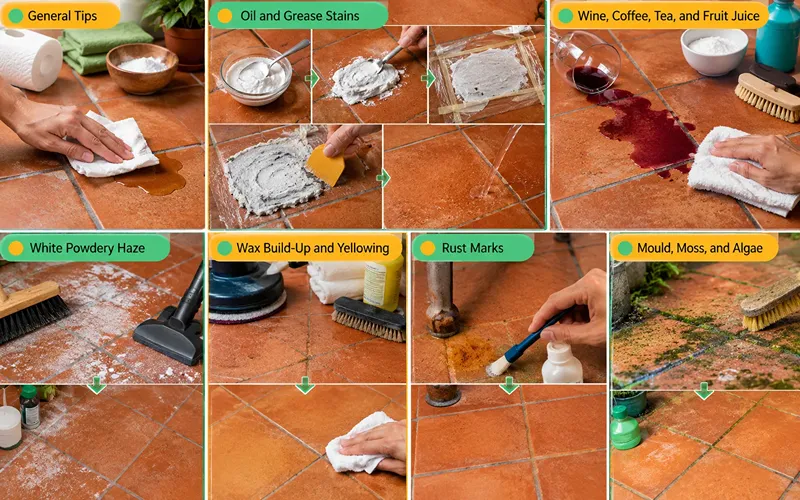
The golden rule is speed. Terracotta absorbs liquid within minutes, so blot spills straight away with a paper towel. Never wipe, as wiping spreads the stain wider. Always test any stain treatment on a hidden tile first.
Oil and Grease Stains
Cooking oil soaks into the pores, so scrubbing the surface rarely works. Instead, draw it back out with a poultice.
- Mix baking soda or talc with a little water (or a degreasing cleaner for old stains) into a thick paste, like toothpaste.
- Spread it about 5 mm thick over the stain, slightly past its edges.
- Cover with cling film, tape down the edges, and poke a few small holes in it.
- Leave for 24 to 48 hours. As the paste dries, it pulls the oil up.
- Scrape it off with a plastic scraper and rinse. Repeat if a shadow remains.
Wine, Coffee, Tea, and Fruit Juice
Blot immediately, then wash the spot with your neutral cleaner. For a mark that remains, apply a paste of baking soda and water for a few hours. On older stains, an oxygen-based cleaner (sodium percarbonate, sold as “oxygen bleach”) mixed per the label usually fades the colour. Never use chlorine bleach.
White Powdery Haze (Efflorescence)
White, chalky patches are mineral salts pushed up by moisture rising through the floor. Brush the powder away while it is dry and vacuum it up. Washing it first just dissolves the salts and pulls them back in. If it keeps returning, look for the cause: a leak, rising damp, or poor drainage outside. For hard white crusts, use an efflorescence remover made for terracotta, following the label exactly.
Wax Build-Up and Yellowing
Layers of old wax trap dirt and turn yellow over time. No ordinary cleaner can reach through it. Use a wax stripper suitable for terracotta, leave it to work, scrub, then rinse several times. Wipe a white cloth across the floor. If it picks up yellow, some wax remains.
Rust Marks
Rust usually comes from metal furniture feet or plant pots. Use a rust remover labelled safe for natural stone or terracotta, and apply it only to the mark.
Mould, Moss, and Algae (Outdoors)
Sweep away loose debris, then apply an outdoor stone or patio cleaner on a dry day. Let it work as directed, scrub lightly, and rinse. Scrape moss out of the joints first, as it holds moisture against the tiles.
Common Mistakes to Avoid
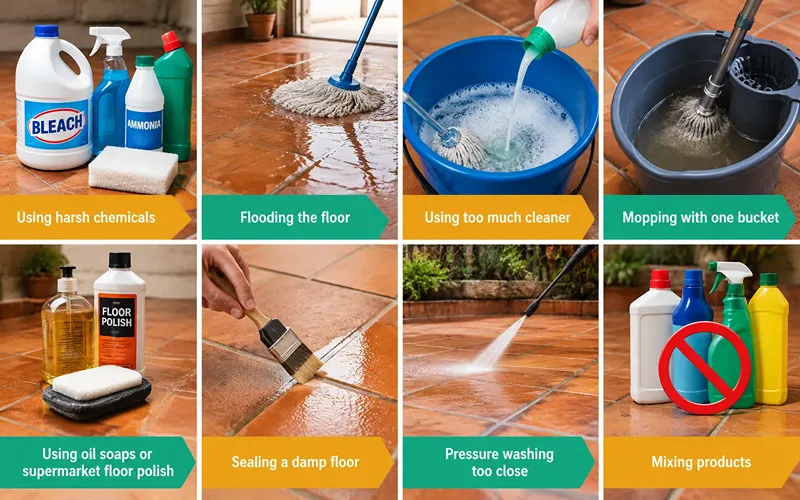
Most terracotta damage is caused by well-meaning cleaning, not by everyday wear. Avoid these mistakes and you will prevent most problems.
- Using harsh chemicals. Bleach, ammonia, limescale removers, and scouring powders can strip sealer, bleach the clay in patches, or leave white marks.
- Flooding the floor. Too much water carries dirt deeper into the tile, weakens grout, and can bring salts to the surface as white haze.
- Using too much cleaner. Leftover detergent leaves a sticky film that attracts dirt, making the floor look dirtier, faster.
- Mopping with one bucket. Your mop water turns dirty within minutes, and you end up spreading grime across the floor.
- Using oil soaps or supermarket floor polish. These build up into a dull, tacky layer that is hard to remove later.
- Sealing a damp floor. Moisture trapped under fresh sealer causes white, cloudy blotches. Always wait until the tiles are fully dry.
- Pressure washing too close. Outdoors, a jet held too near can erode the soft surface and blast out grout. Use a wide fan nozzle, low pressure, and keep your distance.
- Mixing products. Combining an acidic and an alkaline cleaner, or switching brands mid-job, can leave residue in the pores. Rinse well between products.
Tips for Maintaining Terracotta Tiles
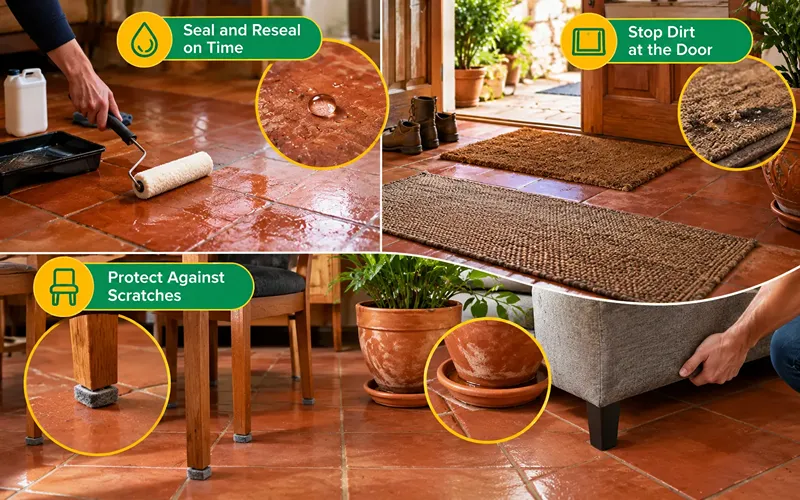
Good maintenance makes cleaning terracotta tiles much easier. A well-protected floor needs little more than a sweep and a damp mop.
Seal and Reseal on Time
A penetrating sealer soaks into the clay and blocks stains without creating a shiny film. It also lets the tile “breathe,” so moisture can escape. Apply thin coats with a lambswool pad, wipe off any excess within 10 to 15 minutes, and add more coats until the tile stops absorbing.
Do not rely on a fixed calendar for resealing. Busy kitchens and hallways may need it every two to three years, while quiet bedrooms last much longer. Do the water drop test twice a year in your busiest doorway, and reseal when the water stops beading.
Stop Dirt at the Door
Put good doormats both outside and inside every entrance. Most of the grit that wears terracotta comes in on shoes. A rug runner in busy walkways also reduces wear.
Protect Against Scratches
Fit felt pads under chair and table legs. Lift heavy furniture rather than dragging it. Use saucers under plant pots to stop water rings and rust marks.
Keep a Simple Schedule
| When | Indoor task | Outdoor task |
| Daily or every other day | Sweep or vacuum busy areas | Sweep away leaves and debris |
| Weekly | Damp mop with neutral cleaner | Brush out joints |
| Monthly | Scrub grout lines | Check drainage and for moss |
| Every 6 months | Water drop test | Water drop test |
| Yearly | Deep clean high-traffic areas | Seasonal wash and reseal before winter or monsoon |
Caring for Outdoor Terracotta
Outdoor tiles face sun, rain, dust, and sometimes frost. Clear fallen leaves quickly, as they can leave brown tannin stains within days. In very hot, dusty climates, sweep more often and rinse dust away early in the morning, before the tiles heat up. In cold climates, make sure tiles are sealed before winter, because water that freezes inside the clay can crack or flake the surface.
Final Thoughts
Learning how to clean terracotta tiles properly is mostly about doing less, not more. Use gentle products, very little water, and deal with spills quickly. Test your sealer twice a year and reseal when water stops beading.
Follow the routines in this guide and your terracotta will develop a warm, natural patina instead of stains and dull patches. With the right care, these tiles can last a lifetime and keep getting more beautiful with age.
Frequently Asked Questions
What is the best thing to clean terracotta tiles with?
For regular cleaning, use a pH-neutral cleaner made for natural stone or terracotta, mixed with lukewarm water. Keep an alkaline terracotta cleaner for occasional deep cleans and greasy kitchen floors.
Can I use dish soap on terracotta?
A few drops in a bucket of water is fine for a quick clean on sealed tiles. Using too much leaves a slippery film, so rinse well afterwards. A dedicated neutral floor cleaner is the better choice for regular use.
How do I make old terracotta tiles look new again?
Strip away old wax or failed sealer, deep clean, and let the floor dry completely. Then apply a penetrating sealer. A colour-enhancing sealer will bring back much of the rich, deep tone.
Why do my terracotta tiles look dull after mopping?
The most common cause is cleaner residue or dirty mop water. Rinse with clean water and dry the floor with a towel. If the dullness remains, the sealer may be worn or there may be old wax build-up.
Can I clean terracotta tiles with a pressure washer?
Only outdoors, and with care. Use low pressure, a wide fan nozzle, and keep a good distance from the surface. Check that the grout is sound first, and reseal once the tiles are dry.