Laminate floors are tough on top but have one weak spot: water. The surface layer resists scratches and fading, while the core underneath is usually a wood-based fiberboard that can swell if moisture gets into the seams. That is why learning how to clean laminate floors properly matters as much as how often you clean them.
The damage from poor cleaning is slow and easy to miss. A soaking wet mop can leave edges lifting months later, and the wrong product can leave a dull film that makes a clean floor look dirty. Grit does harm too, because it acts like sandpaper every time someone walks across it.
The short answer: Remove dust and grit with a dry microfiber mop or a vacuum on its hard-floor setting. Then wipe the floor with a barely damp microfiber mop and a cleaner made for laminate, and dry any wet patches right away.
This guide from Just Lay, your trusted choice for Flooring in Dubai, walks through the tools you need, the exact steps, a simple cleaning schedule, stain removal, homemade solutions, and the mistakes to avoid.
Essential Tools and Supplies for Cleaning Laminate Floors
You only need a few inexpensive items, and the best ones use little or no water. Keep them together in one closet so a quick clean takes no planning.
| Item | What it is for | What to look for |
| Microfiber dust mop | Daily dust, hair, and grit | Flat head with a washable pad |
| Vacuum | Grit in seams and along walls | Hard-floor setting or soft-brush attachment, with no spinning beater bar |
| Microfiber spray or flat mop | Damp mopping | A fine mist, or a pad you can wring out well |
| Laminate floor cleaner | Regular and deep cleaning | Labeled safe for laminate; pH-neutral is a good sign |
| Spray bottle | Homemade solutions or plain water | Fine-mist nozzle |
| Soft microfiber or cotton cloths | Spot cleaning and drying | Clean, lint-free, and light in color |
| Blunt plastic scraper | Hardened gum and candle wax | Plastic only, never metal |
| Isopropyl alcohol or mineral spirits | Tough marks such as marker or shoe polish | Small amount on a cloth, never poured on the floor |
Practical tip: wash microfiber pads without fabric softener. Softener on a mop can leave a film on the floor that is very hard to remove.
How to Clean Laminate Floors Properly: Step by Step

The best way to clean laminate flooring is to remove the grit first, then use as little liquid as possible. These six steps work for most floors. Check your flooring brand’s care guide before you start, because rules vary and ignoring them can affect your warranty.
- Clear the room. Move chairs, baskets, and small rugs out of the way. Lift heavy items rather than sliding them.
- Remove loose dirt. Use a dust mop or a vacuum on its hard-floor setting, working from the far corner toward the door. Never skip this step, because a damp mop will drag any grit across the surface.
- Prepare your cleaner. Use a laminate floor cleaner exactly as the label says. More product will not clean better, and excess cleaner is a common cause of a cloudy floor.
- Dampen the mop, not the floor. Spray water lightly onto the mop instead of pouring liquid on the floor. A well-wrung pad should feel barely damp and should not drip when you squeeze it. If you use a spray cleaner, mist one small section at a time.
- Mop along the planks. Work in the direction of the boards, which helps prevent drying streaks. Rinse or change the pad as soon as it looks dirty, so you are not spreading old dirt around.
- Dry the floor. Go over any wet patches with a dry microfiber cloth or pad. As a rule of thumb, the floor should dry within a minute or two; if it takes longer, your mop is too wet.
How to Clean Laminate Floors Without Streaks
Streaks usually come from too much product or a dirty mop pad, not from the floor itself. Try these fixes:
- Use less cleaner than you think you need.
- Start with a clean pad and keep a spare ready for larger rooms.
- Finish by buffing the floor with a dry microfiber pad.
- Stop using any product that leaves a film, even if it is labeled for laminate.
Daily, Weekly, and Deep Cleaning Methods
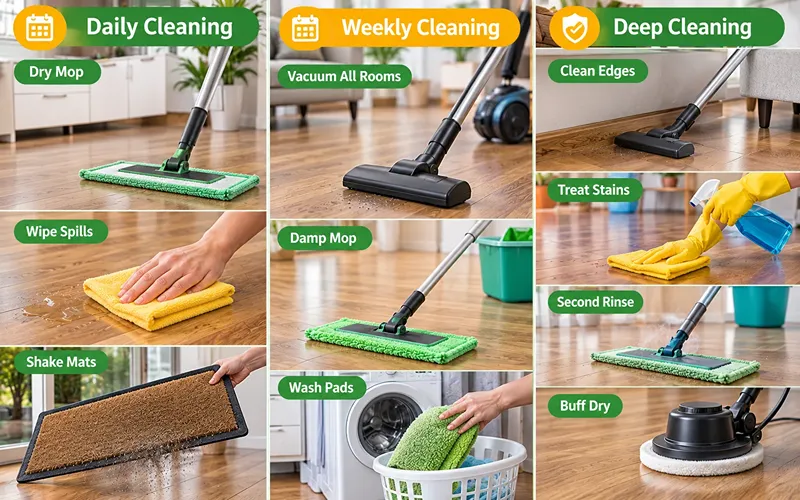
A good routine of laminate wooden flooring cleaning means dry cleaning often, damp mopping only as needed, and deep cleaning a few times a year. Base the schedule on how each room is used, not on a fixed rule for the whole house.
Daily Cleaning
Focus on busy areas such as the kitchen, hallway, and entryway. A few minutes is usually enough.
- Run a dry microfiber mop over high-traffic paths.
- Wipe spills with a soft cloth as soon as they happen, then dry the spot.
- Shake out entry mats so trapped grit does not get walked inside.
Weekly Cleaning
Once a week, clean the whole floor more carefully. Rooms with light use can often wait longer between damp mopping sessions.
- Vacuum all rooms, including corners, edges, and under furniture.
- Damp mop busy rooms using the steps above.
- Wash microfiber pads and let them dry fully before the next use.
Practical example: in a home with a dog and young children, you might dust mop the kitchen daily and damp mop it once a week. A spare bedroom may only need vacuuming weekly and damp mopping once a month.
Deep Cleaning
Deep clean every one to three months, or whenever the floor looks dull even after mopping. Deep cleaning means being more thorough, not using more water.
- Move light furniture and vacuum slowly along the walls and seams.
- Treat any stains first, using the guide in the next section.
- Clean one small section at a time with a laminate cleaner, changing pads as they get dirty.
- Make a second pass with a pad dampened with plain water to lift leftover residue.
- Buff dry with a clean microfiber pad, then let the floor dry completely before moving furniture back.
How to Remove Common Stains, Dirt, and Stubborn Marks
Most laminate stains sit on the surface, so the gentlest method often works if you act quickly. The table below draws on flooring manufacturer guidance and common cleaning practice.
| Problem | What to use | How to do it |
| Juice, wine, chocolate, or grease | Lukewarm water and a non-abrasive cleaner | Wipe with a soft cloth or mop, then dry |
| Marker, crayon, lipstick, shoe polish, or nail polish | Isopropyl alcohol or mineral spirits | Dab onto a clean cloth and rub only the mark |
| Tar or oil | Isopropyl alcohol or mineral spirits | Wipe with a clean cloth, then clean the area with a damp pad |
| Chewing gum or candle wax | Blunt plastic scraper | Let it harden, then lift it off gently; a sealed bag of ice speeds this up |
| Glue | A glue remover suited to the floor | Follow the label, then clean with your usual product |
| Pet accidents | Paper towels and laminate cleaner | Blot right away, clean the spot, and dry the seams well |
| Black scuff marks | Dry microfiber cloth or a pink eraser | Rub gently, testing the eraser in a hidden spot first |
Safety note: test solvents in a hidden spot first and open a window while you work. Mineral spirits and alcohol are flammable, so keep them away from flames and heat. Also avoid using them on wall base or quarter round trim.
Dirt Stuck in Textured Planks
Embossed planks and beveled edges can trap dirt that a flat mop misses. Vacuum with a soft-brush attachment first, moving across the grain as well as along it. For stuck-on dirt, wipe along the texture with a cloth lightly dampened with cleaner, then dry it.
Cloudy Film or Sticky Residue
A cloudy or tacky floor usually means product has built up, so adding more cleaner will make it worse. Make several passes with barely damp, clean pads and plain water, changing pads as they pick up residue. If the film stays, ask your flooring brand which residue remover it approves.
Scratches and Chips
Cleaning will not remove scratches, and laminate cannot be sanded or refinished like hardwood. Small chips can be filled with a color-matched repair kit or putty. If the damage is larger than 1/4 inch, consider having a professional replace the plank.
Natural and Homemade Laminate Floor Cleaners

Plain water on a barely damp microfiber pad is the simplest natural cleaner, and it handles most routine dirt. Use a homemade solution only when water is not enough, and only if your flooring brand allows it.
Option 1: Plain Water Mist
Fill a fine-mist spray bottle with clean water and spray the mop pad, not the floor. This is the lowest-risk choice for regular cleaning because it leaves no residue. Distilled water can help if your tap water leaves white spots.
Option 2: Diluted White Vinegar
Some flooring manufacturers list 1 cup of household vinegar per 1 gallon of warm water as a household cleaner. For a spray bottle, that is about 60 ml (1/4 cup) of vinegar per liter of water.
Advice on vinegar is not the same everywhere. Some flooring experts warn that strong vinegar solutions can harm floor finishes, so stick to the diluted ratio and use it only occasionally. If your care guide says no vinegar, follow your care guide.
Homemade Mixes to Skip
Some popular home remedies can do more harm than good on laminate:
- Dish soap: it can leave a film, and some care guides say not to use soaps or detergents.
- Baking soda paste: it can be abrasive and is hard to rinse out of seams.
- Olive oil or oil soap: oil-based products can leave streaks and residue.
- Bleach: it can damage the surface. Never mix bleach with vinegar or ammonia, because the combination releases toxic gas.
Best Laminate Floor Cleaners and Tools to Use
The best laminate floor cleaner is one your flooring manufacturer approves, so check your care guide first. If it does not name a product, at Just Lay we suggest choosing a cleaner by what it contains and how it applies, not by its name. These are the main types you will find:
| Cleaner type | Good for | Watch out for |
| Ready-to-use spray | Small rooms and spot cleaning | Mist one section at a time; it usually costs more per use |
| Spray mop with a refillable bottle | Everyday damp mopping in larger rooms | Cartridges can leak, and a dirty pad can leave streaks |
| Concentrate | Lower cost per use in larger homes | Measure carefully, because a strong mix can leave a film |
| Plant-based cleaner | Homes that prefer simpler ingredients | Can get sudsy if overused; “natural” does not always mean safe for laminate, so read the label |
Formulas can change, so check the label each time you buy a cleaner.
What to Look For in a Cleaner
- A label that clearly says it is safe for laminate
- A pH-neutral, no-wax formula
- A fine-mist spray or spray mop that controls how much liquid you use
- No oil, wax, or polish in the ingredients
- A recognized safety label, if low-toxicity products matter to you
Tools Worth Buying
- Flat microfiber mop with washable pads: buy at least two pads, one for cleaning and one for drying.
- Vacuum with a hard-floor mode: look for a brush roll that shuts off.
- Fine-mist spray bottle: an inexpensive way to control moisture with any cleaner.
A Word on Floor Restorers
Floor restorers add a polymer layer that can make dull floors look shinier. They can refresh a tired floor, but some manufacturers say laminate never needs wax or polish. Check your warranty first, because these coatings can be hard to remove.
Common Cleaning Mistakes That Damage Laminate Flooring

Most laminate damage from cleaning comes from too much water, heat, or abrasion. Avoid these habits:
- Using a soaking wet mop. Water that sits on the floor can seep into the seams and make the core swell. A string mop and bucket make this mistake very easy.
- Using a steam mop. Heat and moisture can force their way into the joints. Many care guides rule out steamers, and some warranties may not cover steam damage.
- Applying wax or polish. Laminate has a factory-finished surface that does not need either one. They can build up and leave the floor dull or slippery.
- Using too much cleaner. Extra product does not mean extra clean. It often leaves the cloudy film people then try to fix with even more cleaner.
- Scrubbing with abrasive tools. Steel wool, scouring powder, and rough pads can scratch the wear layer. Laminate cannot be refinished, so that damage is permanent.
- Mopping before removing grit. A damp pad pushes sand and small stones across the floor, causing fine scratches. Always dry clean first.
- Using a vacuum’s beater bar. Spinning brushes can scratch the surface over time. Switch to hard-floor mode or use a soft-brush attachment.
- Leaving spills or pet accidents. Liquid at the seams is the main risk, even on water-resistant floors. Wipe it up right away and dry the area.
- Using general-purpose or harsh cleaners. Products not made for laminate can dull the finish, and ingredients like bleach can damage it. Check the label every time you switch products.
- Dragging furniture. One slide of a heavy sofa can scratch a plank from end to end. Lift it, or ask someone to help.
Maintenance Tips to Protect Laminate Floors and Extend Their Lifespan

Good laminate floor maintenance is mostly about keeping grit and moisture away from the planks. How long your floor lasts also depends on its quality and foot traffic, but these habits help any floor age better.
Stop Dirt at the Door
- Place mats inside every exterior door to catch sand and gravel.
- Choose rugs with a solid backing so dirt cannot sift through to the floor.
- Check that mats are safe for laminate, because some care guides warn against rubber backing.
- Ask family and guests to take off shoes, especially shoes with hard heels or cleats.
Protect Against Scratches and Dents
- Put felt pads on chair legs, tables, sofas, and TV stands, and replace them when they wear down or collect grit.
- Swap plastic or metal chair casters for rubber wheels.
- Keep pets’ nails trimmed.
- Use a chair mat at desks where rolling chairs get daily use.
Control Moisture and Climate
- Keep indoor humidity steady. Many care guides suggest about 35% to 65% relative humidity, though the range differs by manufacturer. An inexpensive hygrometer will show your reading.
- Put waterproof trays under indoor plants, and never rely on a thin saucer alone.
- Place absorbent mats near the kitchen sink, dishwasher, and any exterior door that sees rain.
- Check around appliances now and then for slow leaks.
Plan Ahead
- Use curtains or blinds in very sunny rooms to limit fading.
- Keep a few spare planks from the installation, in case one ever needs replacing.
- Store your care guide and warranty somewhere easy to find.
- Replace any swollen plank promptly, because cleaning cannot reverse water damage.
Final Thoughts
Knowing how to clean laminate floors properly comes down to three habits: remove grit often, use very little liquid, and avoid wax, steam, and harsh products. Your flooring brand’s care guide has the final say on what is safe.
Start with one simple change this week: keep a dry microfiber mop within easy reach and use it in your busiest room each day. That small habit helps prevent the fine scratches that make laminate look old. Have a question about caring for your floor? Get in touch with the Just Lay team for advice.
Frequently Asked Questions About Cleaning Laminate Floors
What is the best way to clean laminate floors?
Dry clean with a microfiber mop or a vacuum on its hard-floor setting, then wipe with a barely damp microfiber mop. Use a cleaner made for laminate, and dry any wet patches right away.
Can I use a steam mop on laminate floors?
It is best not to. Steam pushes heat and moisture into the joints, and many flooring brands advise against it. Use steam only if your manufacturer’s care guide specifically approves it.
Is vinegar safe for laminate floors?
It depends on your floor. Some manufacturers list a mix of 1 cup of vinegar per gallon of warm water, while other experts warn against strong vinegar solutions. Follow your care guide, keep the mix diluted, and use it only occasionally.
How often should I mop laminate floors?
Damp mop busy rooms about once a week and quiet rooms every few weeks. Dry clean more often, since removing grit does more to protect the floor than frequent mopping.
Why does my laminate floor look cloudy or streaky?
The usual cause is too much cleaner or a dirty mop pad. Make a few passes with clean, barely damp pads and plain water, then buff dry. If the problem continues, stop using your current product.
How can I make laminate floors shine without wax?
Clean off all dust and residue, then buff the floor with a dry microfiber pad. Laminate’s sheen comes from its factory finish, so wax and polish are not needed.
Can I use a disposable wet-pad mop on laminate?
Yes, if the product label says it is safe for laminate and the pad is damp rather than dripping. Avoid going over the same spot with too much solution, and dry any wet patches.
Do I clean water-resistant laminate differently?
Use the same basic routine, but check your warranty for the exact rules. Water-resistant floors handle spills better, but that does not automatically make them safe for steam or heavy wet mopping.